
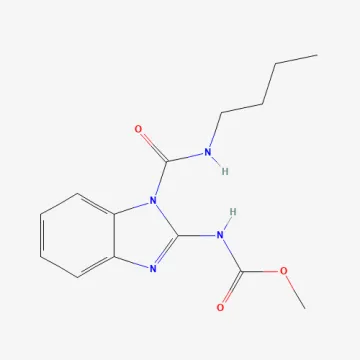
Benomyl
Description
Mode of action
Benomyl belongs to the benzimidazole chemical class and functions as a systemic fungicide with a broad spectrum of activity. Upon application, it is rapidly converted in the plant tissue into carbendazim, which acts as the primary fungicidal agent.
The mechanism of action involves inhibiting the cell division of fungi. Specifically, it disrupts the synthesis of beta-tubulin, a protein essential for the formation of the mitotic spindle, thereby halting the spread and development of the fungal mycelium.
Due to its systemic nature, benomyl is translocated within the plant through the xylem. This allows the compound to protect not only the areas directly treated but also the new growth that develops post-application.
The substance possesses both preventative and curative properties. When applied early in the infection cycle, it can effectively stop the progression of the disease within the plant tissues.
Benomyl is characterized by its high affinity for plant surfaces, which helps it adhere well to leaves and stems, maintaining effectiveness even under challenging weather conditions.
What it targets
Benomyl is highly effective against a wide range of pathogens, including those responsible for powdery mildew, various types of rots, scab, and leaf spots. It is a staple in many agricultural disease management programs.
It is frequently used for seed treatment to prevent soil-borne diseases and seed decay. This practice helps ensure vigorous germination and protects young seedlings from early-stage infections.
In orchards and berry plantations, benomyl is employed to combat scab on pomes and gray mold (Botrytis) on fruits, playing a vital role in maintaining the commercial quality of the harvest.
The fungicide also demonstrates efficacy against Fusarium wilt, protecting the vascular systems of various crops from fungal colonization and decay.
Growers should note that prolonged and repetitive use of benzimidazole fungicides can lead to the development of resistant fungal strains. Therefore, rotating benomyl with other classes of fungicides is recommended for sustainable disease control.
Rates and timing
The application rates for benomyl depend on the specific crop, the target pathogen, and the method of application (spraying versus seed dressing). Generally, field application ranges from 0.5 to 1.5 kg per hectare.
When treating seeds, precise dosage is critical to ensure an even distribution of the fungicide without negatively impacting seed viability or germination potential.
The timing of the application is determined by the growth stage of the crop and the disease pressure. Preventive sprays are usually most successful when executed before symptoms become visible in the field.
Regulations often restrict the number of applications per season to prevent chemical accumulation in the final produce. Producers must adhere to the pre-harvest interval (PHI) as specified on the product label.
Preparation of the spray mixture requires creating a slurry or a concentrated stock solution first, followed by dilution in the spray tank under constant agitation to ensure a uniform mixture.
Restrictions
Strict safety precautions are required when handling benomyl. Personal protective equipment (PPE), including gloves, goggles, and respiratory masks, must be worn to prevent dermal contact and inhalation of particles.
While moderately toxic to some beneficial insects, spraying should be performed during periods of low activity for bees and other pollinators, typically in the early morning or late evening.
It is essential to prevent the contamination of water bodies, streams, or drinking water supplies with the product. Environmental safety guidelines must be strictly followed during equipment cleaning.
The product should be stored in its original, hermetically sealed container in a cool, dry place, strictly away from food, feed, and access by children or pets.
Empty containers must be disposed of in accordance with local environmental legislation and hazardous waste disposal protocols, ensuring they are not reused for other purposes.
Status in the European Union
Not approved in the EU
- CAS number
- 17804-35-2
EU status is for reference only and does not replace national registration in your country.