
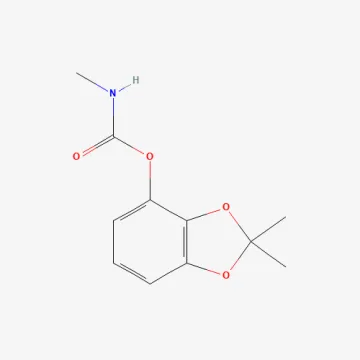
Bendiocarb
Description
Mode of action
Bendiocarb is a member of the carbamate chemical family and functions as a highly effective contact and stomach insecticide. It acts by inhibiting the acetylcholinesterase enzyme within the nervous system of insects.
Upon exposure to the chemical, the insect's ability to transmit nerve impulses is blocked, leading to rapid loss of motor coordination, paralysis, and ultimately death.
The substance provides significant residual activity, maintaining its effectiveness on treated surfaces for extended periods, which helps in preventing re-infestation.
Bendiocarb is characterized by a rapid "knockdown" effect, which is highly valued in scenarios requiring immediate reduction of pest populations.
The chemical structure allows for efficient penetration through the insect cuticle, ensuring efficacy even against pests that are traditionally difficult to manage with milder agents.
What it targets
Bendiocarb is utilized to control a wide array of pests that threaten vegetables, grains, and ornamental plants, including aphids, weevils, and various beetles.
In agricultural settings, it is often employed to target soil-dwelling pests found in the top layers of the substrate, preventing root damage.
Beyond crop protection, it is widely used in public health and residential sectors for the control of household pests such as ants, cockroaches, fleas, and bed bugs.
It is effective against both adult stages (imagines) and larval stages of many insect species, allowing for a comprehensive approach to pest population management.
Its versatility makes it suitable for application in warehouses, livestock facilities, and domestic environments where specialized pest control is required.
Rates and timing
Application rates for bendiocarb depend heavily on the specific target pest, the density of the infestation, and the preferred method of delivery, such as spraying or bait formulation.
Correct dosage calculation is critical to ensure that the pest is controlled effectively without exposing the crop or the environment to excessive chemical levels.
Treatments are typically scheduled based on the peak activity periods of the target species to maximize the interaction between the insect and the residual deposit.
For warehouse applications, surfaces must be cleaned of dust and organic matter prior to treatment to ensure optimal adhesion and efficacy of the insecticide.
Pre-harvest intervals (PHI) must be strictly followed according to regional regulations to ensure the safety of the produce for human or animal consumption.
Restrictions
Bendiocarb is classified as a toxic substance, necessitating the use of personal protective equipment (PPE) for the skin, respiratory system, and eyes during handling.
The application of this product near bodies of water or in areas where beneficial insects, such as bees, are active is strictly prohibited due to its high toxicity to non-target species.
To prevent the development of resistant pest populations, bendiocarb should be rotated with insecticides from different chemical classes throughout the growing season.
Avoid applying the product shortly before the expected harvest date to ensure that no harmful residues remain on the plant tissues intended for consumption.
Storage must be conducted in the original, clearly labeled containers, kept in a secure, cool, and dry location away from feed, food, and unauthorized personnel.
Status in the European Union
Not approved in the EU
- CAS number
- 22781-23-3
- Category (EU)
- IN - Insecticide
- ADI
- 0.004 mg/kg bw/day
EU status is for reference only and does not replace national registration in your country.