
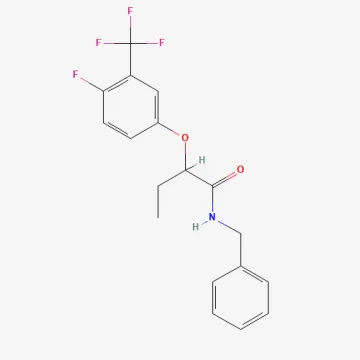
Beflubutamid
Description
Mode of action
Beflubutamid belongs to the amide chemical class (phenylamides) and is a highly effective selective systemic herbicide. Its primary mode of action involves inhibiting the enzyme phytoene desaturase, which blocks the synthesis of carotenoids in susceptible plants.
As a result of disrupting carotenoid biosynthesis in weed tissues, protection of chlorophyll against photo-oxidation under sunlight is lost. This leads to rapid chlorophyll degradation, bleaching (chlorosis), and subsequent death of the unwanted vegetation.
The substance is absorbed by both root systems and above-ground plant parts, after which it is rapidly translocated via the xylem to growing points. This systemic activity ensures reliable control even for weeds at early developmental stages.
Beflubutamid demonstrates high selectivity toward major cereal crops. These crops are capable of metabolizing the active ingredient into safe compounds, preventing phytotoxicity when applied according to regulatory guidelines.
The herbicide maintains high efficacy across a wide range of soil and climatic conditions, although activity can be influenced by soil moisture and ambient temperature at the time of application.
What it targets
Beflubutamid is primarily intended for the control of a broad spectrum of broad-leaved weeds that pose a significant threat during the early growth stages of cereal crops.
The product shows high biological activity against problematic species such as cleavers, field pansy, common lambsquarters, and various knotweed species.
Its systemic action effectively suppresses highly competitive weeds, providing necessary space for the development of the main crop.
The use of beflubutamid is relevant for cleaning winter and spring wheat, as well as barley fields, from weeds susceptible to carotenoid synthesis inhibitors.
- Galium aparine
- Chenopodium album
- Lamium species
- Stellaria media
Rates and timing
The timing of beflubutamid application depends on the growth stage of the crop and the biological characteristics of the weed population in the field.
Typically, herbicides based on this substance are applied during the tillering stage of cereals, when weeds are at the cotyledon or early two-leaf stage.
The application rates of the spray solution must ensure uniform coverage of the weed leaf surface, which is critical for systemic herbicide performance.
Treatment is not recommended under stress conditions for the crop, such as severe drought, frost, or excessive soil moisture.
The exact dosage of the active ingredient is determined according to the registration regulations of the specific product in the country of use, depending on the level of weed infestation.
Restrictions
Beflubutamid is an active component that requires strict adherence to safety protocols when preparing tank mixes and conducting field operations.
When handling the substance, personal protective equipment for skin, respiratory organs, and eyes must be used to prevent accidental poisoning.
Drift of the spray solution onto neighboring crops sensitive to this herbicide class must be avoided, especially during windy weather conditions.
After herbicide application, mandatory re-entry intervals must be observed before allowing workers onto the treated area for manual or mechanical tasks.
Storage of beflubutamid-based products should take place in specialized warehouses, kept away from children and animals, while maintaining appropriate temperature conditions.
Status in the European Union
Approved in the EU
- CAS number
- 113614-08-7
- Approved from
- 01.12.2007
- Approval until
- 31.10.2026
- ADI
- 0.02 mg/kg bw/day
- ARfD
- Not appl.
- AOEL
- 0.3 mg/kg bw/day
EU status is for reference only and does not replace national registration in your country.