
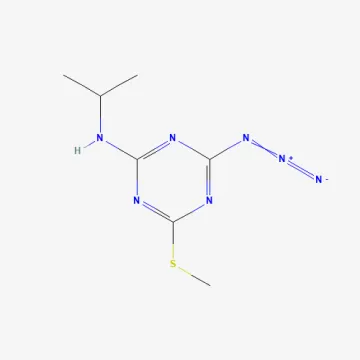
Aziprotryne
Description
Mode of action
Aziprotryne belongs to the triazine chemical class and functions as a systemic herbicide designed to control a variety of weed species in cultivated crops.
The primary mode of action involves the inhibition of photosynthesis by blocking electron transport in photosystem II, which disrupts the energy production of weed cells.
Once absorbed through the leaves or root system, the compound interferes with the plant's metabolic pathways, leading to the accumulation of toxic by-products.
This disruption causes systemic chlorosis, necrosis, and eventual plant death, effectively stopping weed competition in the early stages of crop development.
Its efficacy is influenced by environmental conditions, with optimal results observed when weed growth is active and light intensity is sufficient for metabolic processes.
What it targets
This herbicide group is effective against a broad spectrum of annual broad-leaved weeds and specific grass weeds that interfere with crop growth and yield.
Target species often include highly competitive weeds such as Amaranthus and Chenopodium, which can significantly reduce the potential harvest if left uncontrolled.
It is commonly applied in cereal and vegetable production where season-long protection from weed infestation is critical for achieving optimal yield standards.
The selectivity of the herbicide allows for the protection of target crops while eliminating the competition for essential nutrients, water, and sunlight.
- Amaranthus retroflexus
- Chenopodium album
- Capsella bursa-pastoris
- Sinapis arvensis
Rates and timing
Application rates depend on soil type, weed density, and the growth stage of the crop, typically ranging from moderate to high concentrations per hectare.
To maximize effectiveness, applications should target the early growth phases of weeds, ideally when they have only a few true leaves developed.
Environmental factors like temperature and soil moisture levels must be monitored before application to ensure the herbicide is properly absorbed by the plants.
Precise calibration of spraying equipment is essential to ensure a uniform distribution of the herbicide across the target field area.
Maintaining the correct dosage is vital to avoid potential phytotoxicity to the crop while ensuring that all weeds are exposed to lethal concentrations.
Restrictions
Operators must adhere to strict safety protocols, including the use of personal protective equipment (PPE) such as gloves, respirators, and chemical-resistant suits.
Environmental safety must be prioritized by preventing runoff into streams, rivers, or other bodies of water, which could harm aquatic life.
Crop rotation plans should take into account the soil persistence of the herbicide to ensure that subsequent sensitive crops are not adversely affected.
Storage should be restricted to authorized locations where temperature and humidity are controlled to maintain the chemical integrity of the active substance.
Adherence to pre-harvest intervals is mandatory to comply with food safety standards and ensure that no harmful residues remain in the final produce.
Status in the European Union
Not approved in the EU
- CAS number
- 4658-28-0
EU status is for reference only and does not replace national registration in your country.