
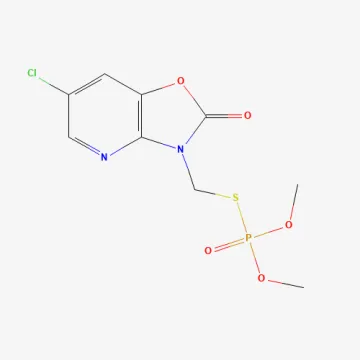
Azamethiphos
Description
Mode of action
Azamethiphos is an organophosphate insecticide that acts through contact and ingestion, providing effective control against a wide range of pests.
The primary mechanism of action involves the inhibition of the enzyme acetylcholinesterase, which is essential for normal nervous system function in insects.
By preventing the breakdown of acetylcholine, the chemical causes overstimulation of the nervous system, leading to paralysis and death.
The compound is characterized by rapid knockdown properties, which ensures quick results in environments requiring immediate pest reduction.
Residual efficacy allows the insecticide to remain active on surfaces, providing long-term protection against recurring infestations in agricultural settings.
What it targets
Azamethiphos is primarily utilized for the management of synanthropic flies, including house flies and stable flies, within professional agricultural facilities.
It is also effective against other nuisance pests such as cockroaches, fleas, and lesser mealworms in poultry house environments.
The product serves as a vital component in biosecurity programs for barns, stables, pigsties, and poultry farms to maintain sanitary standards.
It is particularly effective against insect populations that have developed resistance to pyrethroid-based insecticides due to its distinct mode of action.
The chemical is widely recognized for its utility in integrated pest management (IPM) strategies to suppress disease-carrying insects in livestock operations.
Rates and timing
Azamethiphos is commonly formulated as water-dispersible granules or wettable powders designed to be mixed with water for application.
Application techniques include spraying walls and ceilings or applying the mixture as a paint-on bait in areas where flies congregate.
Dosing rates are carefully calculated based on the specific surface area and the intensity of the pest infestation observed at the site.
Effective treatment usually involves targeting specific "hot spots" where adult insects tend to rest, maximizing the impact of the chemical.
Successive treatments are applied based on the lifecycle of the target pests to ensure continuous control throughout the season.
Restrictions
The application of azamethiphos must never occur directly on animals or on any surfaces that animals can lick or come into contact with.
Livestock must be removed from the treated area before application, and surfaces must be allowed to dry thoroughly before animals are reintroduced.
Personnel handling the chemical must wear appropriate personal protective equipment (PPE), including chemical-resistant gloves and respirators.
Environmental precautions are mandatory to prevent runoff into water bodies, as azamethiphos poses significant toxicity risks to aquatic ecosystems.
Storage must be maintained in original containers in a cool, dry area away from food, feed, and reach of unauthorized personnel or livestock.
Status in the European Union
Not approved in the EU
- CAS number
- 35575-96-3
- ADI
- 0.025 mg/kg bw/day
EU status is for reference only and does not replace national registration in your country.