
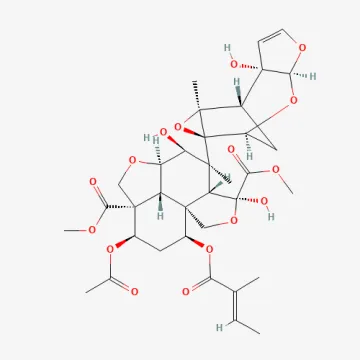
Azadirachtin
Description
Mode of action
Azadirachtin is a complex tetranortriterpenoid limonoid found in the seeds of the neem tree (Azadirachta indica). It serves as a cornerstone in biological pest control, offering an eco-friendly alternative to synthetic chemicals.
The substance acts primarily as an antifeedant, inhibiting the feeding behavior of pests. Once the insect touches or consumes the treated plant tissue, its food-detecting receptors are blocked, leading to starvation.
A crucial aspect of its mode of action is the disruption of the molting process. By interfering with the insect's ecdysone production, it prevents successful molting, causing death during the larval or pupal stages.
Furthermore, azadirachtin acts as an insect growth regulator (IGR), reducing fertility in adults and interfering with egg development, which effectively breaks the pest life cycle.
As a natural compound, it is rapidly degraded by ultraviolet light and microbial action, which minimizes its environmental persistence and makes it suitable for Integrated Pest Management (IPM) programs.
What it targets
Azadirachtin is widely used to control a diverse range of agricultural and horticultural pests that cause significant damage to crop quality and yields.
- Aphids and Whiteflies
- Thrips and Leafminers
- Lepidopteran larvae (caterpillars)
- Spider mites
- Various coleopteran pests
Rates and timing
Effective application of azadirachtin requires careful timing and thorough coverage, as its biological nature makes it sensitive to environmental factors.
The application rate generally varies between 0.5 and 3 liters per hectare, depending on the pest pressure, crop type, and specific product formulation used.
It is recommended to apply the product during early morning or late evening hours to avoid rapid degradation of the active compound by intense solar radiation.
To ensure long-term pest suppression, a schedule of 2 to 4 sequential applications with a 7 to 10-day interval is often necessary to target emerging pest generations.
Proper calibration of spraying equipment is essential to ensure a complete and uniform coating of the canopy, as the substance is most effective upon direct contact.
Restrictions
Do not mix azadirachtin with highly alkaline pesticides, as extreme pH levels can cause the chemical breakdown of the active ingredient and reduce its efficacy.
While generally safer than synthetic neurotoxins, sprayings should be avoided during the peak foraging activity of bees to protect pollinators and ensure safe coexistence.
The product should be stored in a cool, dark environment to prevent the degradation of its complex molecular structure and maintain shelf-life stability.
Operators should wear protective clothing, gloves, and masks during preparation and application, despite the compound's botanical origin and relatively low toxicity.
Users must manage their expectations regarding the "knock-down" time; while pests stop feeding almost immediately, the visible mortality might take several days to reach its peak.
Status in the European Union
Approved in the EU
- CAS number
- 11141-17-6
- Approved from
- 01.06.2011
- Approval until
- 31.01.2027
- ADI
- 0.1 mg/kg bw/day
- ARfD
- 0.75 mg/kg bw
- AOEL
- 0.1 mg/kg bw/day
EU status is for reference only and does not replace national registration in your country.