
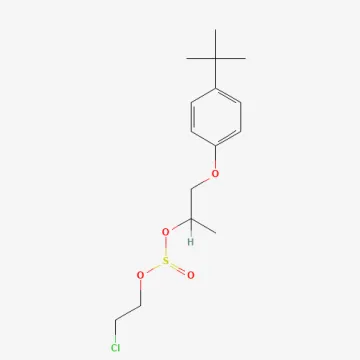
Aramite
Description
Mode of action
Aramite belongs to a group of selective acaricides that primarily affect the mobile stages of plant-feeding mites. The mechanism of action is based on disrupting the metabolic processes in the pest, leading to paralysis and subsequent death.
Preparations based on Aramite have a pronounced contact action. This means that to achieve maximum efficiency, the working solution must evenly cover the leaf surface, ensuring direct contact with the pest.
An important feature of this active ingredient is its specificity. Aramite shows almost no insecticidal activity against beneficial entomophagous insects, which allows its integration into crop protection programs.
The duration of the protective effect depends on weather conditions and the level of field infestation. The product demonstrates high stability on treated surfaces, which helps in suppressing new mite populations for a certain period.
The substance does not show systemic action within the plant, so the main focus during application is on thorough coverage of the underside of leaves, where mite colonies are most concentrated.
What it targets
Aramite is mainly used as an acaricide to control a wide range of plant-feeding mites. It is effective against various species of spider mites, which cause serious damage to vegetable, fruit, and ornamental crops.
The product shows high biological activity against both adult stages and larvae. Due to its selective effect, it is successfully applied on apple, pear, citrus plantations, and various types of berry bushes.
Its use is relevant in greenhouse facilities where spider mites can reproduce year-round. The substance helps reduce pest populations below the economic injury level, preventing premature leaf drop.
Besides fruit orchards, Aramite is used on technical and ornamental crops affected by specific mite species. It helps preserve the plant's photosynthetic surface, which directly affects yield.
Using the product helps avoid massive pest outbreaks during dry weather, when mites develop especially intensely and can destroy the entire crop.
Rates and timing
The application rates of the product depend on the crop type and the degree of infestation. It is recommended to strictly follow the regulations provided by the manufacturer of the specific formulation, as active ingredient concentrations may vary.
Spraying is carried out during the vegetation period at the first signs of mites. It is important to monitor pest density to avoid missing the optimal treatment window for preventing defoliation.
For preparing the working solution, it is necessary to use clean water and follow mixing instructions. Fine spraying is recommended to create a high-quality protective film on leaf surfaces.
Intervals between repeated treatments are determined based on weather conditions. In hot weather, the mite development cycle shortens, so more frequent adjustments to protective measures may be required.
Treatments are not recommended during the flowering period if active apiaries are nearby. Choose morning or evening hours to minimize risks to non-target objects.
Restrictions
When working with Aramite, it is necessary to strictly follow personal hygiene rules and use personal protective equipment for the respiratory tract, skin, and mucous membranes.
The product is toxic to aquatic organisms, therefore discharging residues of the working solution into water bodies or drainage systems is strictly prohibited. Avoid drifting the product to adjacent territories.
Storage must be carried out in original packaging in dry, ventilated storage facilities, inaccessible to children and pets, and away from food products.
To prevent the development of pest resistance, it is recommended to rotate Aramite with acaricides of other chemical classes that have a different mechanism of action.
- Use only functional spraying equipment.
- Observe pre-harvest waiting periods.
- Dispose of packaging in accordance with environmental standards.
Status in the European Union
Not approved in the EU
- CAS number
- 140-57-8
- Category (EU)
- IN - Insecticide
EU status is for reference only and does not replace national registration in your country.