
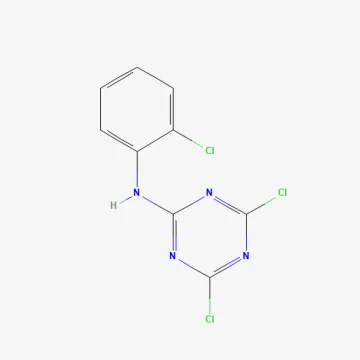
Anilazine
Description
Mode of action
Anilazine is a chemical compound belonging to the triazine class, primarily utilized as a contact fungicide to manage fungal pathogens on crops.
Its mechanism of action involves the inhibition of key enzymes within the fungal cell, effectively disrupting the respiration and metabolic energy production.
As a contact agent, it forms a protective film on the plant surface, preventing fungal spores from germinating and penetrating the leaf tissues.
The efficacy of the substance is dependent on the thoroughness of the application, as it does not possess systemic properties to redistribute within the plant.
Once dry, the residue provides a persistent barrier that remains active against pathogen colonization until the treated surface is either expanded by growth or degraded by weather.
What it targets
The fungicide is effective against a wide range of fungal diseases caused by various taxonomic groups, protecting crops from significant economic loss.
It is specifically noted for its control over leaf spot diseases, including septoria and alternaria, which frequently affect grain and vegetable production.
Anilazine is also used to combat anthracnose and various rust diseases, which are major threats to the photosynthetic capability of cereal and horticultural plants.
By preventing the establishment of these pathogens early in the season, the product supports the overall health and yield potential of the crop.
- Septoria leaf spot
- Alternaria blight
- Anthracnose
- Rust fungi
Rates and timing
The application rate for Anilazine is determined by the crop growth stage, the intensity of the disease pressure, and regional environmental conditions.
Strategic timing is essential; the fungicide should be applied preventively before the environmental conditions favor rapid spread of fungal infections.
Repeat applications may be necessary during periods of high humidity and active plant growth to maintain a sufficient protective layer on newly emerged foliage.
Proper spray equipment calibration is required to ensure even distribution and droplet deposition across the entire canopy, maximizing the protective surface area.
Always consult local label instructions to determine the correct concentration and application volume for specific crops and target pathogens.
Restrictions
Rigorous safety standards must be adhered to when handling and applying Anilazine to protect human health and the surrounding environment.
Strict precautions are necessary to prevent runoff into water bodies, as the substance can be toxic to aquatic organisms and sensitive ecological habitats.
Operators must wear appropriate personal protective equipment to avoid skin contact and inhalation during the mixing and spraying processes.
Observing mandatory pre-harvest intervals is crucial to ensure that residue levels in the final agricultural produce remain within safe regulatory limits.
To avoid the development of fungal resistance, it is recommended to rotate Anilazine with fungicides representing different chemical classes and modes of action.
Status in the European Union
Not approved in the EU
- CAS number
- 101-05-3
- ADI
- 0.1 mg/kg bw/day
EU status is for reference only and does not replace national registration in your country.