
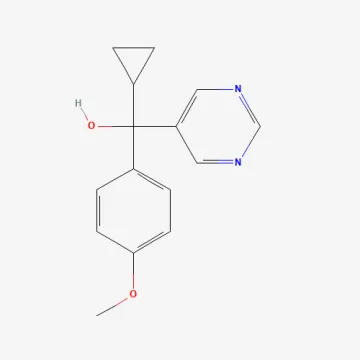
Ancymidol
Description
Mode of action
Ancymidol belongs to the class of pyrimidine compounds and is a highly effective plant growth regulator, specifically a retardant. Unlike fungicides or herbicides, it does not target pathogens or weeds but purposefully alters plant morphology.
The mechanism of action is based on inhibiting the biosynthesis of gibberellins. Gibberellins are responsible for cell and internode elongation, so blocking their synthesis stops the plant from growing excessively tall.
The substance penetrates tissues via leaves or the root system, moving through the xylem. Its effect manifests in the shortening of internodes, which makes the stem stronger and more compact.
Simultaneously with slowing vertical growth, ancymidol stimulates the development of the root system. This allows the plant to better absorb nutrients and water from the substrate.
As a result, a more intense leaf color is observed due to an increased concentration of chlorophyll per unit area of the leaf blade, making ornamental plants more attractive and marketable.
What it targets
The primary use of ancymidol is to control excessive growth of flowers and ornamental crops in greenhouse production. It is essential when growing potted plants, where compactness is a key market standard.
The preparation is used to treat lilies, chrysanthemums, tulips, and many types of decorative foliage plants. It is used to correct the habit of young seedlings, preventing them from overgrowing due to lack of light.
It is successfully used in breeding to preserve cultivar characteristics. It helps to avoid the lodging of tall crops when grown in limited greenhouse spaces.
Ancymidol is effective against the "stretching" that occurs due to unfavorable light regimes during the winter. Its use allows for uniform crop height, which simplifies subsequent maintenance and transport.
- Lilies (hybrids and species)
- Chrysanthemums (potted forms)
- Tulips and bulbous plants
- Ornamental shrubs in containers
- Flower seedlings
Rates and timing
Application rates of ancymidol are determined by the crop type and the desired degree of growth suppression. The concentration of the working solution usually varies from 5 to 45 mg of active substance per liter of water.
Spraying is carried out on actively growing plants when it is necessary to stop stem elongation. It is important to consider that the effect of the preparation is cumulative, so avoiding overdose is crucial.
Application by soil drench is possible, which often ensures a more uniform distribution of the active ingredient within the plant. This method is preferred when working with high-water-holding capacity substrates.
Application timing is strictly regulated: treatment should be carried out before bud formation begins to avoid flower deformation. Repeat treatments are possible only after assessing the specific cultivar's reaction.
Strict adherence to the temperature regime in the greenhouse is necessary. At high temperatures, the activity of retardants decreases, requiring dosage adjustments according to the manufacturer's instructions.
Restrictions
Ancymidol requires careful handling, as excessive dosage can lead to total growth arrest and irreversible leaf deformation. It is important to conduct preliminary tests on small groups of plants.
When using the preparation, contact with mucous membranes and skin must be avoided. Working with concentrated forms requires the use of standard personal protective equipment for agrochemicals.
The preparation is incompatible with certain types of fertilizers containing growth stimulants, as their effects are mutually exclusive. Checking for physical-chemical compatibility is mandatory before creating tank mixes.
The substance should be stored in a place inaccessible to children and animals, away from direct sunlight and heat sources. Violation of storage conditions leads to rapid degradation of the molecule and loss of efficacy.
Disposal of product residues and containers must be carried out in accordance with local environmental legislation. Do not allow the product to enter water bodies or sewage systems.
Status in the European Union
Not approved in the EU
- CAS number
- 12771-68-5
- Category (EU)
- PG - Plant growth regulator
EU status is for reference only and does not replace national registration in your country.