
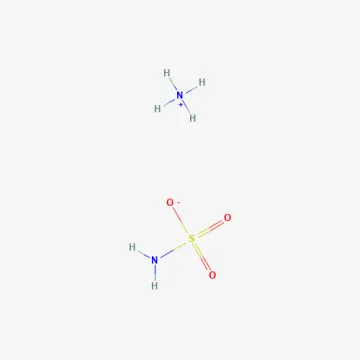
Ammonium sulphamate
Description
Mode of action
Ammonium sulfamate is an inorganic chemical compound with pronounced herbicidal properties. Its mode of action is systemic: upon contact with green foliage, the substance moves through the xylem and phloem, suppressing biochemical processes in the plant's meristematic tissues.
The product exhibits high activity regarding nitrogen metabolism within weed cells. The disruption of protein synthesis leads to a rapid cessation of growth, yellowing, and the subsequent death of both above-ground and underground parts of the plant.
In the soil, the substance is capable of relatively rapid decomposition by soil microorganisms. It transforms into nitrogen forms that can subsequently be assimilated by crops, acting as a specialized mineral fertilizer.
The efficiency of the product depends significantly on weather conditions. Maximum impact is achieved during high air and soil humidity, which facilitates better penetration of active ions into weed tissues.
Due to its lack of selectivity, ammonium sulfamate is classified as a non-selective herbicide. This means that any direct contact of the working solution with crops will result in their damage or death.
What it targets
The main purpose of this compound is the control of persistent perennial weeds, as well as the destruction of woody and shrubby vegetation on non-agricultural land.
The product effectively suppresses the development of a wide range of species, from grasses to stubborn broadleaf weeds with well-developed root systems. It is often used for clearing utility rights-of-way, road verges, and forest clearings.
Ammonium sulfamate is successfully used for controlling tree and shrub sprouts in areas where complete vegetation removal is required to ensure the safety of infrastructure facilities.
It can be used to prevent the resprouting of stumps after tree felling. When applied to the cut surface, the substance penetrates the cambium and root system, blocking the biological biomass recovery processes.
- Clearing areas around warehouses and industrial zones.
- Eliminating unwanted vegetation on irrigation canals.
- Clearing land for new plantings.
Rates and timing
Application rates for ammonium sulfamate depend directly on the type of weed and its growth stage. To achieve a stable herbicidal effect, relatively high concentrations of the working solution are required.
When treating woody and shrubby vegetation, the working fluid is applied directly to fresh stumps or by spraying the foliage during the period of active sap flow. Ensuring complete coverage is essential for systemic penetration.
Application timing is usually timed to the period of active weed growth, when nutrient translocation is directed toward the roots. This ensures maximum accumulation of the active ingredient in underground plant organs.
It is not recommended to apply the product immediately before rainfall, as rainwater may wash the preparation off the leaf surface, reducing its efficacy.
Intervals between applications should account for the weed species composition and their regeneration capacity. When dealing with deep-rooted perennial weeds, repeat spraying may be necessary during the season.
Restrictions
The main limitation of using ammonium sulfamate is its high corrosivity toward metals. All application equipment must be thoroughly rinsed immediately after completing the work.
Avoid spray drift onto neighboring crops. Operation in windy weather is strictly prohibited due to the risk of damaging desirable plants.
The product requires strict adherence to safety measures: use personal protective equipment for skin, eyes, and respiratory organs. If contact with mucous membranes occurs, flush immediately with plenty of water.
Store the product in dry, cool rooms, avoiding contact with moisture, which promotes powder caking. The packaging must be airtight and protected from humid air.
When working near water bodies, mandatory buffer zones must be observed to prevent the herbicide from entering the water, where it may negatively affect aquatic ecosystems.
Status in the European Union
Not approved in the EU
- CAS number
- 13765-36-1
EU status is for reference only and does not replace national registration in your country.