
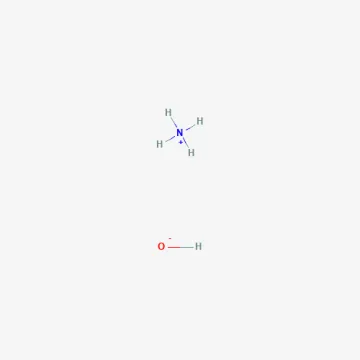
Ammonium hydroxide
Description
Mode of action
Ammonium hydroxide (an aqueous solution of ammonia) is an inorganic compound widely utilized in agricultural practice as a contact pesticide and a highly effective source of nitrogen fertilizer. When introduced into the soil, the substance dissociates, releasing ammonium ions that interact dynamically with soil particles.
The mechanism of toxic action against harmful organisms relies on a drastic shift in the acid-base balance within the rhizosphere. The high concentration of free ammonia inflicts chemical burns on the soft tissues of pests and pathogens, while also disrupting vital biological processes at the cellular level.
The substance exhibits a strong fumigation effect. Gaseous ammonia fills soil pores, effectively reaching and eliminating soil-dwelling pests and larvae in deeper horizons where traditional liquid insecticides may not achieve adequate penetration.
As a herbicide, ammonium hydroxide acts as a contact desiccant, inducing rapid wilting and necrosis of unwanted vegetation. Its effectiveness is particularly pronounced on young weed seedlings that have not yet developed a robust protective cuticle.
A significant feature is its dual-purpose role: once the toxic period dissipates, the nitrogen residues undergo transformation into nitrates and ammonium forms, becoming readily available for crop nutrition and stimulating initial growth.
What it targets
Ammonium hydroxide is used as a soil sanitation agent, targeting a broad spectrum of soil-borne pathogens including bacteria, fungi responsible for root rots, and various nematodes that threaten crop viability.
The substance is effective against various soil-dwelling insects, such as wireworms, mole crickets, and soil-borne larvae, providing a clean environment for seeds and transplants.
It is applied for weed control on fallow fields or during pre-planting soil preparation, helping to reduce weed pressure before the main crop is established.
In greenhouse operations, it is frequently employed to disinfect substrate and equipment, effectively managing soil fatigue and reducing the overall infectious background without resorting to persistent synthetic fungicides.
It can also be integrated into orchard management programs to suppress overwintering pest populations in the root zones during the tree dormancy period.
Rates and timing
Application rates depend heavily on soil texture, organic matter content, and the targeted pest density. Typically, solutions ranging from 2% to 5% active ingredient concentration are used to achieve the desired level of soil sanitation.
Immediate and thorough incorporation into the soil (at a depth of 10–15 cm) is mandatory. Without proper soil sealing or compaction, the gaseous ammonia will escape into the atmosphere, rendering the treatment ineffective.
Application timing must strictly adhere to a waiting period of at least 2–3 weeks before sowing or planting. This interval is critical to ensure that ammonia concentrations have dropped to safe levels for delicate crop roots.
Application should be performed under optimal soil moisture conditions. Excessively dry soil accelerates gas loss, while waterlogged soil may lead to uneven distribution and potential temporary phytotoxicity due to acidity pockets.
Post-application, rolling or covering the soil is highly recommended to trap the ammonia vapors within the soil profile, ensuring maximum contact with the target pests.
Restrictions
Ammonium hydroxide is a caustic and toxic substance that requires strict adherence to safety protocols. Personal Protective Equipment (PPE) including ammonia-rated respirators, chemical-resistant gloves, and eye protection is essential.
Treatment near open water bodies is strictly prohibited. The substance is highly toxic to aquatic life, and even trace amounts can lead to significant damage to fish and aquatic invertebrate populations.
Application on very light, sandy soils is discouraged due to the risk of rapid gas escape or leaching, which reduces the efficiency and increases the environmental risk of the treatment.
Mixing with other pesticides is strongly discouraged without prior laboratory compatibility testing, as the chemical reaction between agents could create hazardous by-products or precipitate the active components.
Storage must be handled in airtight, corrosion-resistant containers, kept in a cool, well-ventilated area away from direct sunlight and heat sources to prevent internal pressure buildup.
Status in the European Union
Not approved in the EU
- CAS number
- 1336-21-6
- Category (EU)
- FU - Fungicide
EU status is for reference only and does not replace national registration in your country.