
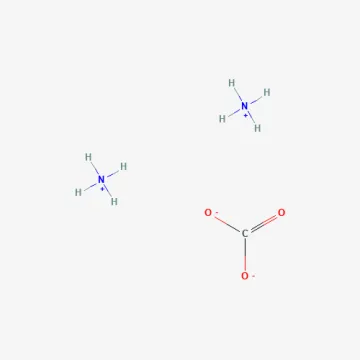
Ammonium carbonate
Description
Mode of action
Ammonium carbonate is widely utilized in professional agriculture as a specialized attractant rather than a traditional contact insecticide. It serves as a volatile chemical signal that mimics the natural odors associated with food sources or breeding grounds, effectively drawing specific insect pests into traps.
The mode of action relies on the release of ammonia, which is detected by the chemoreceptors of target insects. This sensory disruption compels the pests to move toward the source of the scent, allowing growers to capture them for monitoring or population reduction purposes.
This compound is typically incorporated into pheromone or food-based trapping systems. Its high volatility ensures that the scent plume spreads rapidly across the field or orchard, creating an effective attraction zone even in varying wind conditions.
Unlike conventional pesticides that target the pest’s physiological systems, ammonium carbonate influences behavior through olfactory signaling. This makes it an ideal tool for integrated pest management (IPM) programs, where chemical load on crops needs to be minimized.
The rate of release is highly dependent on ambient temperature and humidity. Higher temperatures accelerate the decomposition of the substance, leading to a more intense odor output. Agronomists must account for these environmental factors when determining the placement and maintenance of traps.
What it targets
Ammonium carbonate is primarily targeted at insect pests that possess acute chemosensory systems, particularly those that feed on organic matter or decaying proteins. It is essential for early-season monitoring to detect the arrival of harmful populations.
It is particularly effective against fruit flies (Tephritidae), which represent a significant threat to orchard yields. By deploying traps, growers can identify the exact onset of adult emergence, facilitating precise timing for subsequent protective measures.
The substance is also highly successful in managing various types of weevils, such as the strawberry blossom weevil. Its ability to attract adults before they cause significant damage to flowers or fruit makes it a key tool in pre-emptive crop defense.
Using this attractant allows agronomists to adopt a data-driven approach to pesticide applications. By counting the number of insects caught in the traps, growers can make informed decisions on whether an insecticide intervention is actually necessary.
- Strawberry blossom weevil.
- Various species of fruit flies.
- Specific beetles attracted to protein odors.
- Adult pest population monitoring in orchards.
Rates and timing
Application rates are determined by the design of the trap and the biological behavior of the target pest. Typically, 5 to 20 grams of ammonium carbonate are placed inside a dispenser to ensure a consistent odor release for the required duration.
Timing is critical and must align with the phenology of the target insect. Traps should be installed at least one to two weeks before the expected flight period, providing baseline data on population trends as the season progresses.
Maintenance schedules depend on environmental conditions. In hot and dry weather, the attractant evaporates more quickly, necessitating more frequent checks and replenishments to maintain the effectiveness of the odor plume.
Strategic placement within the field or orchard is essential for efficacy. Traps should be spaced evenly, taking into account prevailing wind directions to ensure the scent signal reaches the widest possible area of the crop.
For optimal performance, the attractant is often combined with adhesive surfaces or liquid killing agents within the trap. This ensures that once the insects are lured by the ammonia scent, they are successfully contained and counted.
Restrictions
Storage of ammonium carbonate requires an airtight container in a cool, dry environment, protected from direct sunlight. Exposure to humid air causes rapid degradation, reducing the product's effectiveness before it is even used in the field.
Safety precautions are necessary when handling concentrated material, as ammonia vapors can irritate the respiratory tract and eyes. Workers should handle the product in well-ventilated areas or outdoors to avoid inhalation of high-concentration fumes.
Do not mix the compound with strong acids or bases, as this may trigger uncontrolled chemical reactions. While the substance is not considered a high-persistence pollutant, care should be taken to keep it away from open water sources.
The efficacy of the attractant is negatively impacted by heavy rainfall, which can wash the material out of open-type traps. After prolonged wet weather, a field inspection is recommended to ensure the lure remains active.
At the end of the season, all remaining materials and used traps must be disposed of according to local chemical waste regulations. Proper cleaning of equipment prevents corrosion and ensures the longevity of the trapping gear for future seasons.
Status in the European Union
Not approved in the EU
- CAS number
- 10361-29-2
EU status is for reference only and does not replace national registration in your country.