
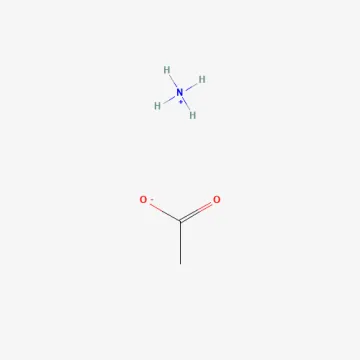
Ammonium Acetate
Description
Mode of action
Ammonium acetate is widely utilized in agronomic practice primarily as a key component of attractants in pheromone and food-based traps. The substance mimics natural volatile signals that lure specific insect pests to a monitoring or mass-trapping site.
The mechanism of attraction is based on the compound's ability to release volatile components that simulate chemical markers of food sources or insect breeding grounds. Insects perceive this odor as a signal indicating the presence of food or suitable conditions for oviposition.
Unlike contact insecticides, ammonium acetate does not destroy pests directly. It acts as a beacon, allowing agronomists to precisely determine the onset of insect flight and estimate population density within a specific field.
A crucial aspect is the selectivity of the action. When used in complex attractant mixtures, ammonium acetate allows for the targeting of specific pest species without harming beneficial entomophages inhabiting the agroecosystem.
When used in nutrient mixtures or specific formulations, the substance may influence the metabolic processes of insects, although its primary role remains that of a signal-attractant.
What it targets
The primary use of ammonium acetate involves traps for monitoring fruit flies, particularly the olive fruit fly (Bactrocera oleae), which is a serious pest in oil-crop growing regions.
The substance is also effective against certain fruit fly species (Drosophila suzukii) and other dipteran insects that damage vegetable and berry crops during the fruit ripening period.
The application of attractants containing ammonium acetate allows for the control of insects in orchards, vineyards, and greenhouses, where tracking pest pressure dynamics is critical.
Using traps with this substance helps prevent pest outbreaks by enabling the timely application of highly specialized protective measures.
The monitoring method using pest attraction helps reduce overall pesticide usage by shifting from calendar-based treatments to treatments triggered by actual detection of the threat.
Rates and timing
Application rates for ammonium acetate depend on the type of trap used and the density of monitoring points per hectare. Typically, one dispenser or vial of the active substance is designed to function for 30 to 60 days.
Trap placement should be conducted in advance, before the start of the mass flight of the target pest. On industrial plantations, it is recommended to install 1 to 5 traps per hectare for complete area coverage.
Replenishing the active substance or replacing dispensers is carried out according to the manufacturer's regulations, taking into account climatic conditions that affect evaporation rates.
Under high temperatures and intense solar radiation, the longevity of the attractant may decrease, requiring adjustments to the equipment maintenance schedule.
The agronomist must regularly inspect traps (at least once a week) to record the number of captured individuals and make informed decisions regarding the start of protective treatments.
Restrictions
Ammonium acetate requires careful handling. It is necessary to avoid direct contact with skin and mucous membranes by using standard personal protective equipment.
Storage of the preparation must be in tightly closed containers in a cool, dark place, inaccessible to unauthorized persons and animals.
The substance is relatively stable, but improper storage can lead to a loss of volatility, rendering the traps ineffective for attracting the target organisms.
When installing traps, it is important to place them at the canopy level or in areas of maximum insect activity, avoiding direct sunlight on the containers if specified by the instructions.
Disposal of used consumables must be conducted in accordance with local environmental regulations for chemical waste.
Status in the European Union
Not approved in the EU
- CAS number
- 631-61-8
- Category (EU)
- SY - Synergist
EU status is for reference only and does not replace national registration in your country.