
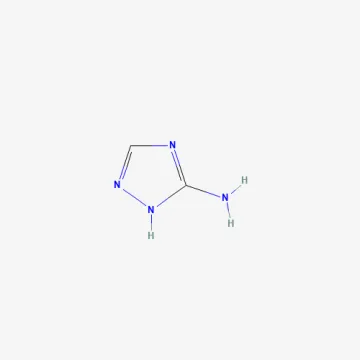
Amitrole
Description
Mode of action
Amitrole (3-amino-1,2,4-triazole) is a systemic herbicide belonging to the triazole chemical class. It is absorbed by the plant foliage and roots and translocated throughout the vascular system.
The primary mode of action is the inhibition of chlorophyll and carotenoid biosynthesis. By interfering with pigment production, the herbicide forces the plant to undergo chlorosis and inhibits photosynthesis.
Amitrole interferes with the enzymatic activity required for meristematic tissue growth. This stops the development of new plant tissues, ultimately leading to plant death after a period of weeks.
Due to its systemic nature, the substance is highly effective at reaching the deep-seated root systems of perennial weeds, ensuring systemic control rather than just surface damage.
The metabolic impact on the weed is profound, as the herbicide disrupts the fundamental biochemical pathways necessary for plant survival and structural integrity.
What it targets
Amitrole is primarily utilized as a broad-spectrum, non-selective herbicide for the control of various annual and perennial grasses and broad-leaved weeds.
It is specifically known for its effectiveness against persistent species such as couch grass, thistles, bindweed, and horsetails, which are often resistant to other common herbicides.
The compound is typically used on non-crop land, industrial sites, along fence lines, and in forestry management to clear vegetation before planting or site development.
In certain regions, it has been used in orchards for weed control around the base of trees, although this requires extreme caution to prevent contact with the crop foliage.
It also shows efficacy against certain aquatic weeds, though its application in water bodies is strictly regulated due to environmental toxicity concerns.
Rates and timing
Application rates for amitrole depend heavily on the target weed species, their growth stage, and prevailing environmental conditions like temperature and moisture.
The most favorable results are obtained when weeds are in their active growth phase, as this promotes maximum uptake and distribution of the active ingredient throughout the plant.
Application is carried out via sprayers that ensure uniform coverage of the leaves, which is critical for the systemic absorption of the herbicide.
Because the herbicide acts slowly, users are advised not to re-apply prematurely, allowing the plant enough time to metabolize the substance and show signs of necrosis.
Precision application is essential to minimize the amount of chemical released into the environment while ensuring that target weeds receive a lethal dose.
Restrictions
The use of amitrole is restricted or banned in many jurisdictions due to its potential toxicity and persistence in soil and water systems.
Users must adhere to local regulations regarding chemical handling, storage, and disposal to prevent environmental contamination and protect human health.
Strict personal protective equipment (PPE) requirements are mandatory, including chemical-resistant gloves, coveralls, and respiratory protection during mixing and spraying.
Crop rotation restrictions are significant; one must ensure sufficient time has passed for the chemical to degrade in the soil before planting any subsequent crops.
Drift prevention is of paramount importance; spraying should never occur during high-wind conditions to avoid damage to off-target, non-susceptible plant life.
Status in the European Union
Not approved in the EU
- CAS number
- 61-82-5
- Approved from
- 01.01.2002
- Approval until
- 30.06.2016
- ADI
- 0.001 mg/kg bw/day
- ARfD
- 0.015 mg/kg bw
- AOEL
- 0.001 mg/kg bw/day
EU status is for reference only and does not replace national registration in your country.