
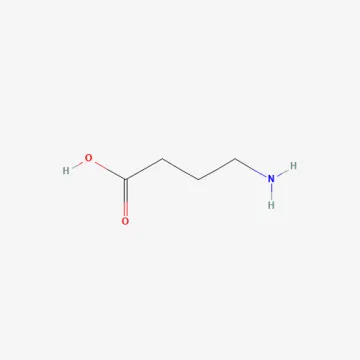
Gamma-aminobutyric acid
Description
Mode of action
Gamma-aminobutyric acid (GABA) is a non-protein amino acid that functions as a powerful biostimulant in plant physiology. It serves as a vital signaling molecule that enables plants to acclimate to stressful environmental conditions.
The primary mechanism of action involves the regulation of intracellular pH and the maintenance of cell membrane integrity. When plants encounter abiotic stress, GABA acts as a buffer, preventing cellular damage and stabilizing metabolic processes.
GABA enhances photosynthetic activity by protecting chlorophyll-containing structures from degradation during heat or drought stress. This ensures that the plant continues to produce energy even under unfavorable external conditions.
Furthermore, GABA is involved in carbon and nitrogen metabolism, helping plants reallocate internal resources effectively. This signaling capability promotes better root development and improves the plant's overall resilience to cold and salt stress.
The compound also plays a role in hormonal homeostasis, assisting in the balance of growth regulators. By minimizing the negative impact of environmental stressors, it allows the plant to focus energy on reproductive development and yield formation.
What it targets
GABA-based products are primarily utilized to mitigate stress rather than target specific pests or pathogens. They are essential tools in modern crop management for protecting yield potential.
Key areas of application include:
- Reducing phytotoxicity caused by herbicide application.
- Enhancing plant tolerance to drought and thermal shock.
- Mitigating stress from spring frosts and unexpected cold snaps.
- Improving survival rates of overwintering crops.
- Boosting fruit set and overall crop productivity under stress.
Rates and timing
Application rates are determined by the specific formulation and the crop stage. Because GABA is a highly active signaling molecule, it is effective at very low concentrations, often applied as part of a foliar spray program.
The timing of application is crucial; it should be used preventively before known stress periods or curatively as soon as a stress event (like drought or chemical burn) occurs. Regular application cycles can support sustained development throughout the growing season.
Compatibility with other agrochemicals is generally high, though growers should verify pH levels when mixing with fertilizers or pesticides. Proper mixing ensures that the stability of the active GABA component is maintained.
Foliar application is the preferred method for rapid uptake. Spraying ensures the substance is absorbed directly through the leaves, providing an immediate metabolic response that soil-applied nutrients might not achieve as quickly during stress.
Applications should be scheduled for the early morning or late evening to maximize absorption. Avoiding peak heat prevents the evaporation of the solution, allowing the plant to fully assimilate the amino acid before it dries on the surface.
Restrictions
While gamma-aminobutyric acid is a safe, naturally occurring compound, it should be handled with standard care consistent with agricultural chemical safety protocols. Protective gear is recommended when handling concentrated solutions.
Storage must be maintained in a cool, dry place, away from direct sunlight, to prevent the breakdown of the active molecule. Maintaining original packaging ensures the longevity and efficacy of the product over multiple seasons.
Avoid exceeding the recommended dosage. Over-application can sometimes disrupt normal growth patterns due to an excessive signaling response, which requires the plant to expend extra energy to process the surplus amino acids.
GABA-based biostimulants should be used in conjunction with balanced fertilization programs. They serve as metabolic enhancers that maximize the efficiency of existing mineral nutrition but cannot replace fundamental soil fertility requirements.
Always adhere to the specific product label regarding harvest intervals. Due to its nature as a biological component, GABA typically leaves no harmful residues, making it a sustainable choice for integrated pest and crop management systems.
Status in the European Union
Not approved in the EU
- CAS number
- 56-12-2
- Category (EU)
- PG - Plant growth regulator
EU status is for reference only and does not replace national registration in your country.