
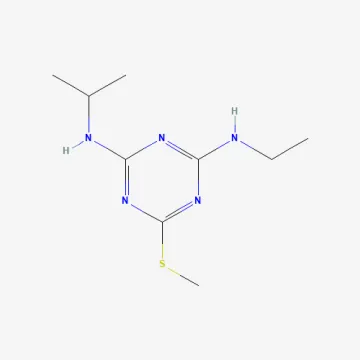
Ametryn
Description
Mode of action
Ametryn belongs to the chemical class of symmetrical triazines and acts as a systemic, selective herbicide. It is absorbed by plants primarily through the root system from the soil, but it also demonstrates foliar uptake after weed emergence.
The primary mechanism of action involves the inhibition of photosynthesis in sensitive plant species. By disrupting the electron transport chain within photosystem II, Ametryn prevents the production of energy required for plant survival, eventually leading to death.
Once absorbed, the active ingredient is translocated through the xylem to the active growing points of the plant. This rapid movement ensures that the physiological processes are interrupted throughout the weed, resulting in chlorosis and progressive decay.
The speed of action is significantly influenced by environmental conditions such as soil temperature, moisture levels, and solar radiation. Favorable conditions promote faster uptake and, consequently, quicker visible symptoms in targeted weeds.
Ametryn provides a residual protective effect that can last for several weeks. This residual control is highly valued in pre-emergence applications, as it prevents secondary flushes of weeds from interfering with the early development of the crop.
What it targets
This herbicide is highly effective against a broad spectrum of annual broadleaf weeds and certain grasses. Common target species include pigweed, lambsquarter, purslane, and various knotweed species that typically infest industrial and agricultural fields.
It is most potent when applied to young, actively growing weeds that are at the cotyledon or early leaf stage. The efficacy of the product declines significantly once weeds have matured and developed a more complex root system.
Rates and timing
Application rates are determined by factors such as soil organic matter content and the specific crop species being treated. Higher soil organic content may require higher rates of the herbicide to achieve the desired level of efficacy due to soil adsorption.
Timing is essential for optimal results. Applications are generally performed either pre-emergence or at the very early post-emergence stage of the crop. Ensuring the weeds are in the vulnerable 'white thread' stage is crucial for achieving maximum mortality.
Restrictions
Care must be taken to prevent drift, especially when application occurs near sensitive vegetation or crops. Weather conditions should be monitored, as extreme rain events immediately after application may reduce product efficacy by displacing the active ingredient.
Safety precautions are mandatory when handling Ametryn, including the use of protective clothing, gloves, and respiratory protection. Users must adhere to local environmental regulations regarding chemical storage, disposal, and rotational crop restrictions.
Status in the European Union
Not approved in the EU
- CAS number
- 834-12-8
EU status is for reference only and does not replace national registration in your country.