
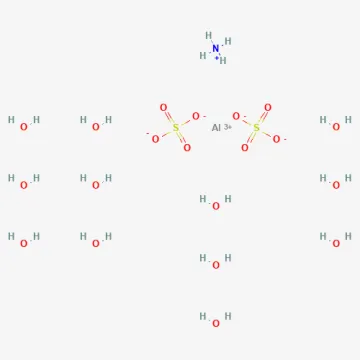
Aluminium ammonium sulphate
Description
Mode of action
Ammonium aluminum sulfate is a double salt used in agricultural practice as a natural antiseptic and astringent agent. It is valued for its ability to create unfavorable conditions for the development of fungal and bacterial pathogens.
The mechanism of action involves the coagulation of proteins on the cell membranes of microorganisms. By binding to these proteins, the substance effectively inhibits the biological activity of bacteria and fungi, preventing colonization on plant surfaces.
Beyond its antimicrobial activity, the substance exhibits tanning properties. This helps to strengthen the cell walls of treated plants, creating a robust physical barrier that reduces the susceptibility of tissues to infection by pathogen spores.
Ammonium aluminum sulfate can also neutralize metabolic toxins produced by various fungi, which are often harmful to stressed or injured plants. This support promotes faster recovery and reduces the overall infection pressure in the field.
As a contact-based solution, it does not accumulate significantly within the vascular system of the plant. This characteristic makes it a suitable tool for preventive measures in ecological and integrated farming systems.
What it targets
Ammonium aluminum sulfate is primarily employed as a prophylactic measure against a range of external infections. Its main agricultural focus lies in protecting seeds, seedlings, and harvested crops from decay-causing agents.
- Prevention of mold development on seeds prior to planting.
- Protection of fresh pruning cuts on fruit and ornamental trees.
- Disinfection of storage crates and warehouse surfaces to control spoilage.
- Mitigation of soil-borne pathogen impact on seedling development in greenhouses.
Rates and timing
For seed treatment, use a 0.5% to 1% aqueous solution. It is critical to ensure uniform coating of the seed surface, followed by thorough drying to prevent premature germination or fungal growth caused by excess moisture.
For treating pruning wounds or preventing rot on storage surfaces, higher concentrations of up to 3-5% are recommended. These solutions form a protective layer that aids in sealing the wound and preventing moisture loss.
Spraying of vegetative crops should occur during periods of high humidity or risk of outbreaks. Application cycles are typically spaced every 7 to 10 days, depending on environmental conditions and the specific plant type being treated.
When mixing with other agents, conduct a compatibility test first. Due to its acidic nature, ammonium aluminum sulfate may affect the stability or efficacy of certain biological fertilizers or specialized plant growth regulators.
While the substance is relatively safe, ensure that harvested edible produce is rinsed thoroughly with clean water to remove any surface residues before market preparation or direct consumption.
Restrictions
Appropriate personal protective equipment should be worn during preparation and application. Direct contact with concentrated solutions may cause mild irritation to the skin, eyes, and respiratory tracts of operators.
Avoid mixing with alkaline products, as these will cause a chemical reaction, leading to precipitation and the loss of active antifungal properties. Always check the pH of the water used for mixing the solution.
Avoid excessive accumulation of aluminum salts in the soil by monitoring application frequency. Long-term, high-dose usage on the same site can slightly lower soil pH, which might affect the growth of highly acid-sensitive crops.
Storage must be in a cool, dry environment inside tightly sealed containers. Being hygroscopic, the product can clump when exposed to atmospheric moisture, which significantly hinders its ability to dissolve evenly.
Corrosion is a factor when using metallic spraying equipment. Always flush equipment with clean, fresh water immediately after finishing the application process to maintain the integrity of nozzles, tanks, and valves.
Status in the European Union
Approved in the EU
- CAS number
- 7784-26-1
- Approved from
- 01.02.2024
- Approval until
- 31.01.2039
- ADI
- 0.3 mg/kg bw/day
- ARfD
- Not appl.
- AOEL
- 0.001 mg/kg bw/day
EU status is for reference only and does not replace national registration in your country.