
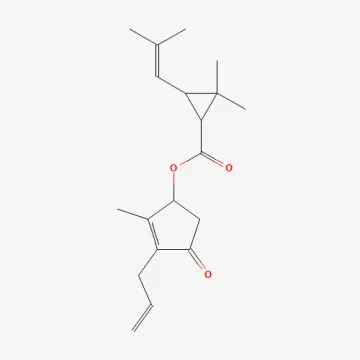
Allethrin
Description
Mode of action
Allethrin belongs to the group of first-generation synthetic pyrethroids. It acts as a contact insecticide targeting the insect's nervous system.
The mechanism of action involves disrupting the sodium channel conductance in the nerve cell membranes of the insect. This leads to excessive excitation, paralysis, and the subsequent death of the pest.
The substance is characterized by a rapid speed of action, often referred to as a knockdown effect. The insect loses the ability to move and feed almost instantly upon contact with the active ingredient.
Unlike more modern pyrethroids, allethrin has lower stability when exposed to light and high temperatures. This limits its use in open fields but makes it highly effective in indoor environments.
Allethrin is often used in combination with synergists, such as piperonyl butoxide, to enhance its biological efficacy and overcome natural pest resistance.
What it targets
Products containing allethrin are used to control a wide range of flying and crawling insect pests.
Primary targets include flies, mosquitoes, sandflies, wasps, and other dipteran insects that pose sanitary risks.
The substance also shows activity against stored-product pests, including various beetles and moths that damage grain and food supplies in storage facilities.
In certain instances, allethrin is utilized in horticulture for protecting ornamental crops against small insects in greenhouse conditions.
The chemical effectively impacts both adult stages (imago) and larval stages of susceptible insect species.
Rates and timing
Application rates of allethrin vary depending on the product formulation, such as aerosols, fumigation mats, or emulsifiable concentrates.
When used in domestic fumigators, the dosage is calculated for prolonged evaporation of the substance over several hours in a closed room.
In professional pest control, the concentration of active solutions is adjusted based on the pest population density and the type of surface being treated.
The timing of application depends on the activity phase of the insects; treatments are typically performed during periods of peak emergence or infestation.
To achieve maximum effect, it is essential to follow the manufacturer's recommendations regarding the volume of the treated space and exposure duration.
Restrictions
Allethrin is moderately toxic to warm-blooded animals, so it is necessary to use personal protective equipment for skin and respiratory protection during handling.
The use of these products in the presence of people and pets is strictly prohibited unless specifically stated otherwise in the household product instructions.
The substance is harmful to bees and other beneficial insects; therefore, its use during the flowering period of melliferous plants in open areas is strictly restricted.
Contamination of open water bodies must be avoided, as allethrin exhibits high toxicity to fish and other aquatic organisms.
After treating indoor areas, ensure proper ventilation to prevent the accumulation of active ingredient vapors in the air.
Status in the European Union
Not approved in the EU
- CAS number
- 584-79-2
EU status is for reference only and does not replace national registration in your country.