
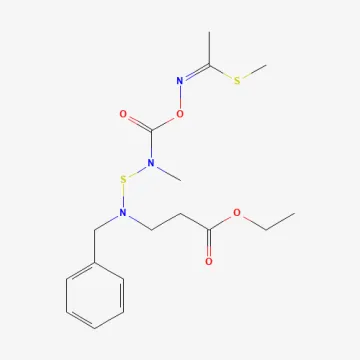
Alanycarb
Description
Mode of action
Alanycarb belongs to the carbamate class of chemicals, which are highly effective contact and systemic insecticides. Their activity is based on the inhibition of the acetylcholinesterase enzyme in the insect's nervous system.
Blocking this enzyme leads to the accumulation of acetylcholine in the synaptic clefts, causing continuous stimulation of nerve impulses. As a result, the pests suffer from paralysis, which quickly leads to the death of the organism.
The substance is characterized by its ability to penetrate plant tissues, providing protection against hidden pests. Its systemic properties allow the active ingredient to move through the xylem, covering the young organs of the plant.
One of the key features of alanycarb is its high speed of action, which allows for rapid control of infestation outbreaks in the field. It is effective against a wide range of chewing and sucking insects.
Formulations based on this group have a pronounced residual activity, creating a protective barrier that prevents re-infestation of crops by pests for a certain period.
What it targets
Alanycarb is used to protect vegetable, industrial, and cereal crops from a complex of dangerous pests. The main targets include aphids, thrips, leafhoppers, and certain species of psyllids.
Due to its systemic action, it effectively destroys pests that feed on plant sap, even in hard-to-reach places such as curled leaves or plant axils.
The product also shows high activity against larvae and adults of various beetle species that damage the vegetative parts of crops. It is actively used in integrated pest management (IPM) programs to control population densities.
In field conditions, the effectiveness of alanycarb against sucking pests significantly reduces the risk of viral diseases transmitted by these insects.
Application against leaf-mining pests also yields satisfactory results, as the substance is capable of penetrating the leaf parenchyma, affecting larvae located inside the tissue.
Rates and timing
Alanycarb application rates depend on the crop type, level of infestation, and regional climatic conditions. On average, the product is applied by spraying during the active growing season of the plants.
It is important to strictly observe the regulated waiting periods before harvest, as carbamates require time to fully degrade within plant tissues. Usually, this period ranges from 20 to 30 days.
Working solutions are prepared immediately before use using clean water. It is recommended to ensure high-quality coverage of the entire leaf surface to achieve maximum biological effect.
The number of treatments per season is limited to prevent the development of pest resistance. It is recommended to rotate the use of alanycarb with products from other chemical groups.
When planning field operations, the temperature regime should be taken into account: the effectiveness of carbamates may decrease at extremely high or low air temperatures.
Restrictions
Alanycarb is classified as a toxic substance, so personal protective equipment must be strictly used when handling it. This includes respirators, safety goggles, gloves, and specialized clothing.
Treatments are prohibited during the crop flowering period because the substance is highly toxic to honey bees and other beneficial entomophages. It is important to notify beekeepers in advance.
Discharging remaining product or wash water into water bodies or sewage systems is strictly forbidden. It is necessary to comply with environmental regulations regarding the disposal of containers and pesticide residues.
In case of contact with skin or mucous membranes, immediately rinse the affected area with plenty of running water and seek medical attention if necessary.
Storage must be in original packaging in a cool, dry place inaccessible to children and animals, protected from direct sunlight.
Status in the European Union
Not approved in the EU
- CAS number
- 83130-01-2
- Category (EU)
- IN - Insecticide
EU status is for reference only and does not replace national registration in your country.