
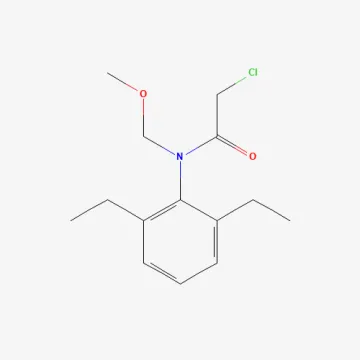
Alachlor
Description
Mode of action
Alachlor belongs to the chloroacetanilide chemical class and acts as a selective systemic soil-applied herbicide.
The primary mechanism of action involves inhibiting protein synthesis and suppressing enzymes responsible for cell division in germinating weeds.
The active substance is primarily absorbed by the shoots and roots of emerging weeds as they grow through the treated soil layer.
Once inside the plant tissues, alachlor translocates rapidly, blocking growth in meristematic tissues, which leads to the death of seedlings before or immediately after emergence.
The product exhibits maximum efficiency under conditions of adequate soil moisture, as moisture is essential for the uniform distribution of the herbicide in the soil horizon.
What it targets
This herbicide is used to control a broad spectrum of annual grasses and several broad-leaved weed species.
It is particularly effective against aggressive weeds such as Setaria species, barnyard grass, large crabgrass, and common pigweed.
Application of the herbicide significantly reduces weed competition during the early stages of crop development, which is crucial for overall yield protection.
The main crops for which alachlor is utilized include corn, soybeans, sunflowers, and other broad-leaved crops that demonstrate tolerance to this active ingredient.
- Corn
- Soybeans
- Sunflowers
- Rapeseed
Rates and timing
Application rates vary depending on the soil texture and the degree of weed infestation present in the field.
On light sandy soils, minimum dosage rates are typically applied, whereas on heavy clay or high-organic-matter soils, rates are increased to ensure effective weed control.
The product is applied by spraying the soil surface either pre-planting or immediately post-planting, but always before crop emergence.
Successful performance requires meticulous soil preparation; the field surface must be level and free of large clods to ensure the creation of a uniform protective barrier.
The duration of residual protection typically ranges from 6 to 10 weeks, depending on climatic conditions and the rate of degradation in the soil.
Restrictions
Handling alachlor requires strict adherence to safety protocols due to its toxicological profile, and the use of personal protective equipment is mandatory.
Application on very light sandy soils with low organic matter content is discouraged to prevent the herbicide from leaching into the root zone of the crop.
Crop rotation regulations must be observed if replanting is necessary within the same season, as chemical residues may affect sensitive plant species.
Use of the product in water protection zones is prohibited, as the substance is mobile in soil water and exhibits toxicity to aquatic organisms.
Storage must be carried out in specialized facilities within original containers, maintaining a temperature range that prevents exposure to direct sunlight.
Status in the European Union
Not approved in the EU
- CAS number
- 15972-60-8
EU status is for reference only and does not replace national registration in your country.