
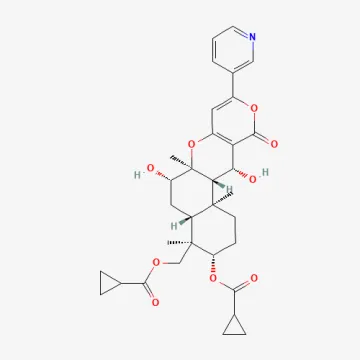
Afidopyropen
Description
Mode of action
Afidopyropen is a breakthrough active ingredient belonging to the novel chemical class known as pyropenes. It provides a unique mode of action that differs significantly from conventional insecticides currently used in commercial agriculture.
The substance acts as a highly selective modulator of chordotonal organs in insects. By targeting the transient receptor potential (TRP) channels, it disrupts the insect's sensory perception, coordination, and ability to feed effectively.
A primary characteristic of afidopyropen is its potent anti-feedant effect. Upon contact or ingestion, the targeted pests experience an immediate cessation of feeding, which prevents crop damage and limits the transmission of plant viruses by aphids.
The compound exhibits strong translaminar properties, allowing it to penetrate leaf tissues effectively. This characteristic ensures that the active substance provides thorough protection even to the underside of leaves and enclosed parts of the plant canopy.
Because of its unique mode of action, afidopyropen serves as a critical tool for anti-resistance management programs. It shows no cross-resistance with existing insecticide classes, such as neonicotinoids or organophosphates, making it vital for sustainable pest control.
What it targets
Afidopyropen is specifically engineered to target a broad range of aphid species. It delivers exceptional efficacy against major pests that threaten the yield and quality of both field crops and protected horticultural crops.
Beyond aphids, the insecticide demonstrates activity against whiteflies and certain other sucking insects. This broad activity profile makes it a versatile solution for farmers dealing with complex pest infestations in intensive production systems.
- Cotton aphid (Aphis gossypii)
- Potato aphid (Macrosiphum euphorbiae)
- Cabbage aphid (Brevicoryne brassicae)
- Greenhouse whitefly (Trialeurodes vaporariorum)
The substance is registered for use on various crops, including potatoes, tomatoes, cucumbers, peppers, and various ornamentals. Its high selectivity ensures minimal impact on non-target beneficial insect populations.
Economically, the use of afidopyropen is highly valuable for high-value crops where aphid-vectored diseases represent a major threat. By quickly stopping aphid activity, it helps maintain the health and vigor of the treated plantations.
Rates and timing
Application rates for afidopyropen are determined by the specific formulation and the severity of the pest pressure. Growers should strictly adhere to label instructions to ensure optimal efficacy and long-lasting protection.
Timing of application is crucial; it is recommended to apply the product at the onset of pest colonization. Proactive treatment prevents the development of large colonies and minimizes the potential for rapid spread across the field.
Proper coverage is essential for achieving the best results. Equipment should be calibrated to ensure the spray reaches all foliage, utilizing the translaminar movement to reach pests that may be hidden from direct contact.
The substance is compatible with many standard tank-mix partners, such as fungicides, allowing for efficient management of multiple crop threats in a single pass. A compatibility test is advised before creating large-scale tank mixes.
Sustainable usage involves monitoring pest populations and rotating afidopyropen with insecticides possessing different modes of action, which helps maintain the long-term effectiveness of all available crop protection tools.
Restrictions
Afidopyropen features a favorable safety profile regarding environmental impact. It is generally safe for many beneficial insects, including predators and parasitoids, which supports its use within Integrated Pest Management (IPM) systems.
Despite its selectivity, standard safety protocols must be followed during handling. Operators should wear appropriate personal protective equipment (PPE), including gloves, respiratory protection, and eye protection, to minimize exposure.
Users should avoid application during peak pollinator activity hours to ensure the safety of bees. Following label restrictions regarding the timing of application relative to the bloom cycle is essential for pollinator conservation.
It is strictly prohibited to discharge unused product or cleaning water into water bodies or sewage systems. Waste management must comply with local and regional environmental laws governing chemical pesticides.
Storage should be in the original, tightly sealed containers in a cool, well-ventilated area, safely away from food, animal feed, and out of reach of children or unauthorized personnel.
Status in the European Union
Not approved in the EU
- CAS number
- 915972-17-7
EU status is for reference only and does not replace national registration in your country.