
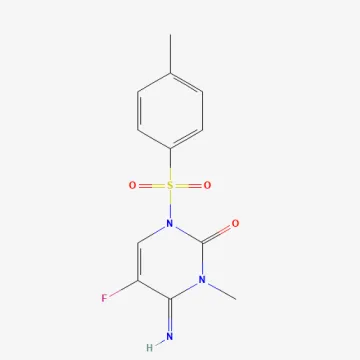
Flumetylsulforim
Description
Mode of action
Flumethylsulfurim belongs to the sulfonylurea chemical class, which acts as highly potent inhibitors of the acetolactate synthase (ALS) enzyme.
The mechanism of action involves blocking the biosynthesis of essential amino acids such as valine, leucine, and isoleucine, which are vital for plant growth.
Upon application, the herbicide systemically translocates through the plant tissues, halting cell division and stopping the development of sensitive weed species.
Weeds cease competition with the crop shortly after treatment, as the active substance interferes with the plant's metabolic pathways.
Complete necrosis and plant death occur gradually over several weeks, ensuring long-term control of the target weed population in the field.
What it targets
This group of herbicides is primarily used for the control of a broad range of broadleaf weeds in cereal crops and other agricultural systems.
They are effective against numerous problematic weed species, including members of the Brassicaceae, Chenopodiaceae, and Polygonaceae families.
Maximum efficacy is achieved when targeting young, actively growing weeds in the early stages of development, typically 2 to 4 true leaves.
The system allows for the suppression of both annual and certain perennial weed species, significantly improving overall field cleanliness.
Due to their selective nature, these herbicides can be safely applied to specific crops without causing significant damage or phytotoxicity.
Rates and timing
These herbicides are characterized by extremely low application rates, often measured in grams per hectare, reducing the chemical load on the environment.
Application timing must be strictly synchronized with the crop's growth stages, such as the tillering or stem elongation phase for cereals.
To improve performance, the use of surfactants is recommended to ensure better coverage and absorption through the leaf cuticle.
Proper calibration of spraying equipment is essential to achieve a uniform application and consistent control across the entire treatment area.
Optimal environmental conditions, including moderate humidity and temperature, significantly influence the uptake and overall effectiveness of the product.
Restrictions
Soil residual effects represent a key limitation, necessitating careful consideration of crop rotation plans to avoid damage to sensitive subsequent crops.
Applications should be avoided under stress conditions, such as severe drought, cold, or disease outbreaks, which can interfere with the crop's ability to metabolize the herbicide.
Personal protective equipment (PPE) is mandatory for all workers handling these chemicals to ensure safety and prevent exposure risks.
Mitigation measures must be taken to prevent drift onto neighboring non-target crops, water sources, and sensitive ecological areas.
Monitoring soil pH is advisable, as the degradation rates of sulfonylureas can be significantly influenced by the chemical properties of the soil.
Status in the European Union
Pending
- Category (EU)
- FU - Fungicide
EU status is for reference only and does not replace national registration in your country.