
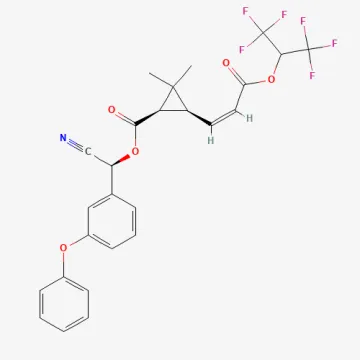
Acrinathrin
Description
Mode of action
Acrinathrin belongs to the chemical class of second-generation synthetic pyrethroids. Its primary purpose is the effective control of insects and mites in agricultural production.
The mechanism of action of the substance is based on disrupting the normal functioning of the pest's nervous system. Acrinathrin affects the sodium channels of nerve cell membranes, causing persistent depolarization.
As a result, insects and mites experience near-instant paralysis, which irreversibly leads to their death. The high activity of the substance is expressed upon contact between the preparation and the pest.
The product has a pronounced contact effect and also shows some signs of stomach activity. Its uniqueness lies in the ability to effectively control mite populations, to which many other pyrethroids are insensitive.
The substance is stable on plants and is resistant to photodegradation under the influence of sunlight, which provides a long-lasting protective effect after field application.
What it targets
Acrinathrin is widely used to protect a broad spectrum of agricultural, fruit, and vegetable crops from a complex of pests.
The primary targets for application are various species of phytophagous mites, particularly spider mites, as well as certain species of sucking insects, such as thrips.
The product is effective against pests that have developed resistance to organophosphorus compounds and other classes of insecticides, making it indispensable in anti-resistance protection programs.
It is used on crops such as vineyards, apple trees, pears, and various vegetables in greenhouses and open fields where high concentrations of mites are observed.
- Spider mites
- Thrips
- Aphids
- Whiteflies
Rates and timing
The application rates of the product depend on the crop type, the severity of pest infestation, and the growth stage of the plants, so always follow the manufacturer's instructions for the specific product.
Treatments are recommended to be carried out upon reaching the threshold density of pests during the crop's growing season. It is important to ensure high-quality coverage of the leaf surface with the working solution.
Pre-harvest intervals are set based on current safety regulations for each specific crop. Exceeding the intervals between treatments may reduce the effectiveness of population control.
To prepare the working solution, clean water must be used, strictly following the dosage indicated on the label to avoid phytotoxicity or a decrease in biological effectiveness.
The temperature during spraying should be optimal, as the effectiveness of pyrethroids can decrease briefly at extremely high temperatures due to evaporation.
Restrictions
Acrinathrin is toxic to bees and other beneficial pollinating insects, so application during the flowering period is strictly prohibited.
It is necessary to avoid spray drift to neighboring fields, water bodies, and pastures. Disposal of empty containers must be carried out according to environmental protection standards.
Working with the product requires the mandatory use of personal protective equipment for the skin, respiratory system, and eyes. Avoid contact of the product with skin and ingestion.
In case of contact with skin or mucous membranes, immediately rinse the affected area with plenty of running water and soap.
With systematic application, it is recommended to alternate the use of acrinathrin with products from other chemical groups to prevent the development of pest resistance.
Status in the European Union
Not approved in the EU
- CAS number
- 101007-06-1
- Approved from
- 01.01.2012
- Approval until
- 31.12.2021
- ADI
- 0.01 mg/kg bw/day
- ARfD
- 0.01 mg/kg bw
- AOEL
- 0.007 mg/kg bw/day
EU status is for reference only and does not replace national registration in your country.