
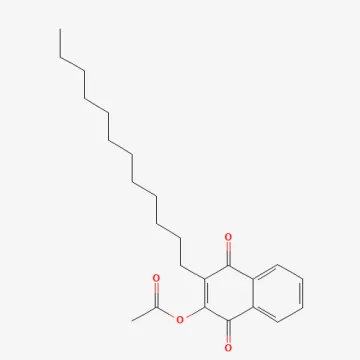
Acequinocyl
Description
Mode of action
Acequinocyl belongs to the chemical class of naphthoquinones. It is a highly specialized acaricide that affects the metabolic processes of pests, leading to their rapid mortality.
The mechanism of action involves the inhibition of electron transport in the mitochondria of mites. The active ingredient blocks complex III in the respiratory chain, resulting in the disruption of energy metabolism within the parasite's cells.
The compound exhibits strong contact action, which necessitates thorough coverage of the treated leaf surface with the working solution to achieve maximum effectiveness.
A key feature of acequinocyl is its high selectivity. It targets all motile life stages of plant-feeding mites while maintaining low toxicity towards many beneficial species of predatory insects.
As the substance does not have systemic properties, the duration of its residual protection depends directly on the uniformity of application and environmental factors affecting the degradation of the active ingredient.
What it targets
Acequinocyl is used exclusively for the control of plant-feeding mites, including species from the Tetranychidae, Eriophyidae, and Tenuipalpidae families.
It is effective against a wide range of species, including populations that have developed resistance to other common classes of acaricides.
The product is applied to various crops, including pome fruits (apples, pears), citrus, vineyards, and several vegetable crops grown in greenhouses.
The active ingredient shows high efficacy in controlling mite populations at all stages of crop development, preventing significant damage to the plant's photosynthetic foliage.
Due to its unique mode of action, acequinocyl serves as an essential component in anti-resistance management strategies when rotated with products from different chemical groups.
Rates and timing
The application rates of the product vary depending on the specific pest species, the density of the infestation, and the type of crop being treated.
Applications should be initiated at the first sign of pest presence to prevent mass reproduction, which can cause irreparable damage to the crop yield.
To ensure optimal results, it is critical to achieve thorough wetting of both the upper and lower leaf surfaces, where mite colonies are typically localized.
Pre-harvest intervals (PHI) are established according to regional pesticide regulations and must be strictly followed to ensure food safety.
Frequency of use is limited to prevent pest resistance: it is generally recommended not to use acequinocyl more than twice per season on a single crop.
Restrictions
When handling acequinocyl, it is essential to strictly follow safety protocols by wearing appropriate personal protective equipment for respiratory, skin, and eye protection.
The product may be toxic to aquatic organisms, and therefore, discharge of residual working solution into water bodies or drainage systems must be avoided.
Application during peak pollinator activity is not recommended, despite the product's relatively favorable safety profile toward many beneficial insects.
Storage conditions must adhere to standard pesticide regulations: keep in a dry, cool, well-ventilated area away from direct sunlight and out of reach of children.
Before preparing tank mixes, a compatibility test is mandatory to evaluate both physical and chemical stability, preventing precipitation or a reduction in biological efficacy.
Status in the European Union
Approved in the EU
- CAS number
- 57960-19-7
- Approved from
- 01.09.2014
- Approval until
- 15.11.2026
- ADI
- 0.023 mg/kg bw/day
- ARfD
- 0.08 mg/kg bw
- AOEL
- 0.014 mg/kg bw/day
EU status is for reference only and does not replace national registration in your country.