
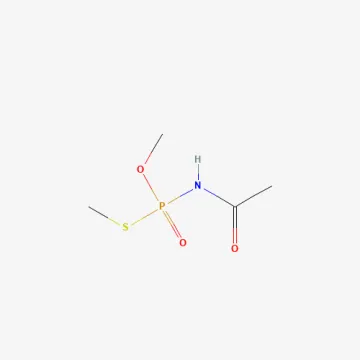
Acephate
Description
Mode of action
Acephate belongs to the organophosphate class of insecticides. It acts as a systemic, contact, and stomach poison, providing comprehensive protection for treated crops.
The primary mechanism of action involves the inhibition of the enzyme acetylcholinesterase within the insect's nervous system. This causes an accumulation of acetylcholine, leading to continuous nerve impulse transmission, paralysis, and eventual death.
Acephate is absorbed rapidly by plant leaves and roots and translocated throughout the plant system. This systemic property ensures that insects feeding on untreated parts of the plant are also affected.
It is known for its relatively quick knockdown effect, making it a reliable choice for managing sudden outbreaks of various agricultural pests.
Due to its broad-spectrum activity, acephate remains a cornerstone in many integrated pest management programs, although its use is often subject to strict regulatory oversight.
What it targets
The substance is highly effective against aphids, thrips, caterpillars, leafminers, and various sucking insects that infest broad-leaf crops.
It is commonly applied to field crops such as cotton, tobacco, soybeans, as well as various fruit and ornamental horticultural plants.
Rates and timing
Application rates generally range from 0.5 to 2.0 kilograms of active ingredient per hectare, depending on the pest pressure and specific crop growth stage.
Timing the application based on pest monitoring data is crucial to maximize efficacy while minimizing the need for multiple successive treatments.
Restrictions
Acephate is classified as having moderate acute toxicity to humans. Handlers must use appropriate personal protective equipment (PPE) during mixing and application.
The compound is toxic to bees and beneficial insects. Application must be avoided during crop flowering and when pollinators are active in the field.
Strict adherence to pre-harvest intervals (PHI) is mandatory to ensure that chemical residues in the harvested produce stay below defined safety thresholds.
Environmental care must be taken to prevent runoff into aquatic ecosystems, as acephate can be harmful to fish and other aquatic organisms.
Storage should strictly follow manufacturer instructions, ensuring containers are kept tightly closed in a dry, ventilated area away from food and water sources.
Status in the European Union
Not approved in the EU
- CAS number
- 30560-19-1
EU status is for reference only and does not replace national registration in your country.