
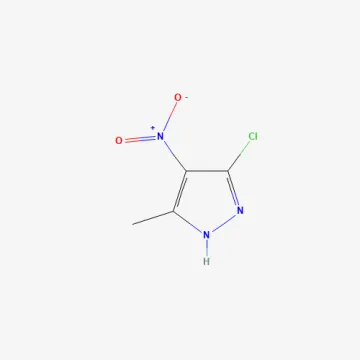
5-chloro-3-methyl-4-nitro-1H-pyrazole
Description
Mode of action
5-chloro-3-methyl-4-nitro-1H-pyrazole belongs to the pyrazole chemical class, which is widely recognized in modern agriculture for its potent biological activity. This heterocyclic compound is engineered to interact with the cellular processes of targeted pests or undesired vegetation.
The primary mechanism of action involves the inhibition of key metabolic pathways. By disrupting the enzymatic reactions necessary for cellular respiration and protein synthesis, the substance effectively stops the growth and development of the target organism, leading to its eventual decline.
This compound exhibits systemic properties, allowing it to be absorbed into the plant's vascular system. Once inside, it translocates to actively growing tissues, providing comprehensive protection across the entire plant structure rather than just the area of contact.
Selectivity is a key feature of this active ingredient. Through precise molecular structure, it can target metabolic processes specific to certain weeds or pathogens, leaving the physiological functions of the main crop relatively unaffected when applied within recommended limits.
The overall efficiency of the compound is highly dependent on environmental conditions. Factors such as ambient temperature, sunlight intensity, and plant metabolic activity influence the uptake and distribution of the active ingredient within the target organism.
What it targets
The substance is primarily used to control a broad spectrum of broad-leaved weeds in cereal crops. It interferes with the development of weeds during their early stages of growth, preventing competition for essential nutrients, light, and water.
In addition to its herbicidal properties, it is employed as a component in fungicides to manage various fungal infections. It is effective against leaf spot diseases, rust, and powdery mildew, which can significantly reduce crop yield and quality.
Furthermore, it serves a role in controlling certain insect populations. The compound acts as a growth regulator or toxicant against larval stages, disrupting their development and reducing the pest pressure in the agroecosystem during critical growth phases.
Typical crops treated with this active ingredient include wheat, barley, maize, and sugar beet. Its multi-functional nature makes it a valuable tool for integrated pest management, allowing farmers to address multiple threats with a single application.
To ensure maximum effectiveness, it is recommended to apply the product during the early stages of weed emergence or upon the first signs of pathogen infestation, as the substance is most effective against active, growing populations.
Rates and timing
Application rates for this active ingredient generally range from 200 to 500 grams of active substance per hectare. The exact rate must be determined based on the level of weed pressure, the crop variety, and the specific target organism being controlled.
The timing of application is critical and should be aligned with the phenological stage of the crop. For optimal performance, application is usually recommended during the vegetative growth phase when the plant is most metabolically active and responsive to the treatment.
The use of surfactants or adjuvants is often suggested to enhance coverage and penetration through the waxy cuticle of plant leaves, particularly in adverse weather conditions or when targeting mature weeds.
Care should be taken not to exceed the recommended dosages to avoid potential phytotoxicity. Even with systemic tolerance, excessive concentrations can place unnecessary stress on the crop, potentially hindering its development or causing temporary discoloration.
Maintaining the correct pH of the spray solution is vital for the stability of the active molecule. It is advised to test the water quality prior to mixing to ensure the product remains in its active, non-degraded form.
Restrictions
Safety during handling is paramount. All operators must wear appropriate personal protective equipment, including respirators, gloves, and protective clothing, to prevent dermal, ocular, or respiratory exposure to the concentrated substance.
Environmental protection measures must be strictly followed. The product should not be applied near water bodies, as it may pose risks to aquatic life. Additionally, care must be taken to avoid drift into non-target areas or bee-foraging sites during active flight hours.
Avoid mixing the substance with highly alkaline fertilizers or pesticides, as such mixtures can cause chemical degradation of the pyrazole molecule, rendering the entire treatment ineffective.
Adherence to the pre-harvest interval (PHI) is mandatory to ensure that residue levels in the final crop are within safe, legally permitted limits. Depending on the crop, this period typically ranges between 30 and 45 days.
To mitigate the risk of resistance development in weeds or pests, it is recommended to practice chemical rotation. Alternating this product with other classes of pesticides helps preserve the efficacy of the active ingredient for future seasons.
Status in the European Union
Not approved in the EU
- CAS number
- 6814-58-0
- Category (EU)
- FU - Fungicide
EU status is for reference only and does not replace national registration in your country.