
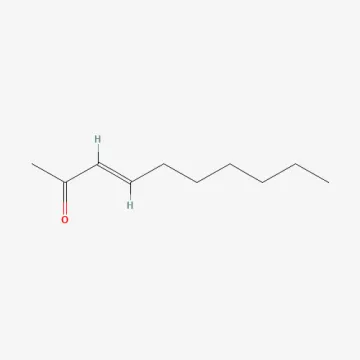
(3E)-dec-3-en-2-one
Description
Mode of action
(3E)-dec-3-en-2-one is a chemical substance classified as an unsaturated ketone, acting as a crucial component in biotechnical pest management strategies.
The core mechanism of action involves interacting with the insect sensory system, effectively disrupting their ability to detect specific chemical signals required for mating or host plant location.
Unlike conventional neurotoxic insecticides, this compound functions by altering the behavioral patterns of target insects, which leads to reduced reproductive success and population decline.
Its high target specificity ensures that the substance provides effective control while minimizing negative impacts on non-target species, such as pollinators and natural predators.
The application of this compound is fundamental in Integrated Pest Management (IPM), serving as a tool for monitoring and sustainable population suppression in agricultural ecosystems.
What it targets
This group of substances is primarily used to target specific insect pests, including various Coleoptera and Lepidoptera species that cause significant crop damage.
The application is effective against pests attacking vegetable crops, fruit orchards, and field cereals by disrupting their olfactory responses.
It is particularly useful for controlling pests with concealed life stages, where standard contact insecticides often fail to achieve sufficient penetration and efficacy.
The substance helps in mitigating the spread of leaf-miners and other organisms that rely heavily on chemical cues to navigate the environment and find host plants.
Furthermore, (3E)-dec-3-en-2-one is utilized in storage pest management to prevent infestation of harvested agricultural commodities in warehouses.
Rates and timing
Usage rates for (3E)-dec-3-en-2-one are determined by the specific delivery system, such as slow-release dispensers, pheromone traps, or specialized bait formulations.
Application timing must align with the pest's phenological cycles, typically based on real-time field monitoring to pinpoint the onset of adult activity.
The density of application points per hectare is crucial to maintain an effective concentration of the active ingredient within the target area.
Replacement schedules for the active dispensers should be strictly followed to ensure consistent efficacy throughout the entire duration of the pest emergence window.
Agronomists recommend initiating treatments immediately upon the first detection of adults to disrupt early mating cycles and prevent population explosions.
Restrictions
Due to the high volatility of (3E)-dec-3-en-2-one, it is essential to store products in airtight containers in a cool environment to prevent premature degradation.
Exposure to direct sunlight should be avoided during storage and transport, as UV radiation can influence the chemical stability of the compound.
Users should exercise caution regarding potential chemical interactions when attempting to combine this substance with other pesticides or adjuvants in the field.
Environmental conditions such as high wind speeds can significantly reduce the efficacy of the substance by dispersing the active vapors away from the treatment zone.
Personal protective equipment should be used during the installation of dispensers to avoid inhalation or skin contact, as concentrated vapors may cause minor respiratory irritation.
Status in the European Union
Pending
- CAS number
- 10519-33-2
EU status is for reference only and does not replace national registration in your country.