
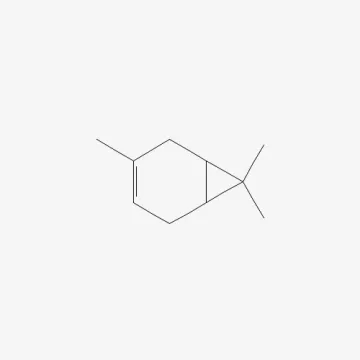
3-Carene
Description
Mode of action
3-Carene belongs to the class of bicyclic monoterpenes, which are naturally produced by coniferous plants and other flora species. In plant protection products, it acts as a natural contact insecticide and repellent.
The mechanism of pest control is based on the destruction of the protective waxy layers (cuticle) of insects. This leads to rapid moisture loss and dehydration of the pest organism, causing its death.
The substance also has a pronounced fumigant effect, acting on the nervous system of phytophagous insects. Terpene vapors penetrate through the respiratory tract, causing paralysis and cessation of vital activity.
3-Carene is often used in synergistic mixtures with other essential oils to increase the overall biological efficacy of the product. It enhances the permeability of the pest's cuticle, facilitating the access of other active components to tissues.
An advantage of this compound is its rapid biodegradation in the environment. It does not accumulate in soil or agricultural produce, making it a promising component for environmentally friendly agriculture.
What it targets
Products based on 3-carene are effective against a wide range of small insect pests that damage vegetable and ornamental crops. These include various types of aphids, spider mites, and whiteflies.
Due to its repellent properties, products in this group successfully deter flying insects, preventing egg-laying on leaves. This helps reduce pest populations at early stages of colonization.
In greenhouses, 3-carene is used for thrips control. Its use helps reduce the number of chemical treatments while maintaining an acceptable level of phytosanitary conditions in the greenhouses.
The substance is actively used to protect ornamental crops and houseplants from soil pests during watering or spraying the root zone. It inhibits larval activity, reducing the risk of root system damage.
- Aphids (all species)
- Spider mites
- Greenhouse whitefly
- Thrips
Rates and timing
Application rates depend on the concentration of the active ingredient in the final product and the type of crop being treated. Working solutions with concentrations from 0.5% to 2% are usually used depending on the severity of the infestation.
Treatments are recommended in the morning or evening hours to avoid rapid evaporation of terpenes under direct sunlight. This ensures the maximum contact time between the product and the pest.
Pre-harvest intervals are minimal because 3-carene is a substance with a low half-life. Often, produce can be consumed 1–2 days after treatment.
The frequency of treatments ranges from 2 to 4 times with an interval of 5–7 days. This periodicity is necessary to eliminate subsequent generations of pests that have hatched from eggs after the first treatment.
It is important to ensure thorough wetting of the leaf blade, especially the underside of the leaf, where mite and aphid colonies are most concentrated.
Restrictions
The main limitation is phytotoxicity if recommended concentrations are exceeded. Burns can occur on delicate young leaves, so preliminary testing on a small area is mandatory.
3-Carene is incompatible with certain types of plastic sprayers, as terpenes can dissolve specific types of polymers. It is recommended to use equipment resistant to aggressive organic solvents.
Contact with skin or mucous membranes can cause irritation. Work must be carried out using personal protective equipment: gloves, goggles, and a respirator.
Products must be stored in airtight containers in a cool, dark place. Improper storage conditions lead to oxidation and loss of biological activity of the active ingredient.
Although the substance is natural, when working with large volumes in enclosed spaces, effective ventilation should be provided to avoid the accumulation of concentrated vapors in the air.
Status in the European Union
Not approved in the EU
- CAS number
- 13466-78-9
EU status is for reference only and does not replace national registration in your country.