
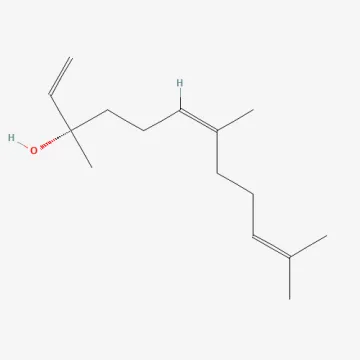
Nerolidol
Description
Mode of action
Nerolidol is a naturally occurring sesquiterpene alcohol found in various plants, where it functions as a secondary metabolite. In agronomy, it is utilized as an attractant to influence the behavioral responses of specific insect species.
The mechanism of action involves mimicking natural signals that insects use for communication, mate searching, or identifying host plants. By deploying these synthetic signals in controlled environments like traps, growers can redirect pest movement.
Nerolidol can also function as a kairomone, signaling the presence of prey to natural predators and parasitoids. This promotes a biological balance in the agroecosystem, encouraging the activity of beneficial insects within the treated area.
As a non-toxic compound, nerolidol does not cause systemic damage to crops and leaves no harmful residues. It provides a strategic alternative to broad-spectrum insecticides by focusing on disrupting pest behavior rather than lethal chemistry.
The field efficacy depends on the stabilization of the substance. Modern agricultural formulations utilize advanced delivery systems that ensure a constant, slow release of the attractant, maintaining its functionality even under fluctuating environmental conditions.
What it targets
The primary use of nerolidol is in the management of various Lepidoptera species, including common fruit tree pests like moths and leafrollers. It is frequently employed in orchards and vineyards to target specific adult stages of these insects.
Monitoring is the key target application. By utilizing nerolidol-based traps, agronomists gain precise data on pest population dynamics, enabling the timing of interventions to be optimized for maximum biological and economic impact.
Mating disruption is another critical target. By saturating the area with the scent of nerolidol, male insects become unable to locate females, effectively suppressing the reproductive success of the pest population across the treated field.
It is suitable for both greenhouse and open-field cultivation. The high specificity of nerolidol ensures that non-target organisms, such as bees and other beneficial pollinators, are generally unaffected during the monitoring process.
This group of substances is a cornerstone of Integrated Pest Management (IPM), where the goal is to reduce reliance on hazardous chemical inputs by using natural, behavior-modifying cues to manage pest density.
Rates and timing
The application rates for nerolidol are dictated by the specific type of dispenser or lure being used. Typically, a low density of traps is deployed per hectare for routine monitoring, while higher densities are used for mass trapping efforts.
The timing of trap installation is crucial and should correspond with the pre-emergence phase of the target pest's life cycle. Historical data and local weather trends should guide the exact installation dates to ensure maximum efficiency.
Lures usually require replacement every 4 to 8 weeks depending on the local temperature and exposure to sunlight. In warmer climates, the rate of evaporation increases, requiring more frequent maintenance to ensure the attractant remains active.
Proper spatial distribution is essential for effective performance. Traps should be placed uniformly throughout the field to ensure complete coverage, preventing pockets of untreated areas where pests might continue to proliferate.
Maintenance involves clearing dead insects from the traps to prevent physical blockage and ensure the scent plume remains unobstructed, which is vital for the continued attraction of new individuals to the monitoring site.
Restrictions
Nerolidol performance is subject to environmental limitations. High wind speeds can disperse the scent signal too quickly, while extreme temperature changes can affect the release rate from the dispenser, potentially reducing the monitoring accuracy.
Care must be taken during trap placement. Installing lures too close to storage facilities or sensitive processing areas can inadvertently draw pests toward areas where they might compromise the quality of harvested commodities.
While safe, workers should handle concentrated forms with standard protective gloves to prevent skin irritation. The concentrated scent can be quite strong and potentially bothersome to personnel working in close proximity for extended periods.
Storage of unused lures must be done in a cool, dark place within sealed containers. Exposure to heat and UV radiation will lead to oxidative degradation of the compound, rendering it ineffective for future field use.
Avoid interfering with other biological control agents present in the field. Although nerolidol is specific, careful placement is necessary to ensure that the attractant signal does not disrupt the natural predatory cycles of beneficial insects.
Status in the European Union
Not approved in the EU
- CAS number
- 142-50-7
EU status is for reference only and does not replace national registration in your country.