
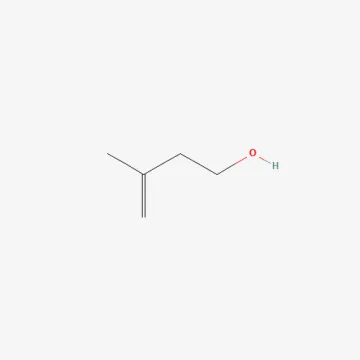
3-Methyl-3-buten-1-ol
Description
Mode of action
3-methyl-3-buten-1-ol is an unsaturated alcohol used as a key functional component in modern plant protection products. Its primary role in formulations is to act as an effective solvent and adjuvant, optimizing the delivery of active ingredients to target organisms.
By altering the surface tension of spray droplets, this substance enables superior coverage and wetting of leaf surfaces. This physical modification facilitates the rapid penetration of the product through the plant's waxy cuticle, enhancing the speed of action.
The compound also aids in the stabilization of complex pesticide formulations, preventing the separation of components. This ensures that the concentration of the active ingredient remains consistent throughout the spraying process.
In terms of biological interaction, 3-methyl-3-buten-1-ol can influence the permeability of cellular membranes in pathogens. By compromising these membranes, it synergistically increases the efficacy of fungicides and insecticides, even at lower doses.
Furthermore, it contributes to the photostability of the active substances, shielding them from UV-induced degradation. This property is crucial for maintaining the required level of crop protection in sunny, open-field environments.
What it targets
In agronomy, products containing this compound are widely used to combat fungal infections, including powdery mildew, rusts, and leaf spot diseases. It acts as an enhancer, ensuring the systemic fungicide reaches its site of action more efficiently.
The substance is also utilized in insecticide formulations to improve control of piercing-sucking insects like aphids and thrips. Improved adherence to plant surfaces allows for more effective contact action against these pests.
Additionally, it is a component in various plant growth regulators that help crops tolerate abiotic stress factors such as drought or heat. By strengthening plant cells, it aids in maintaining optimal growth patterns during harsh conditions.
It also plays a role in herbicide applications, where it serves as a surfactant. This allows for better absorption of systemic herbicides by weed foliage, leading to more reliable control of difficult-to-kill species.
- Improved penetration and systemic efficacy of pesticides
- Enhanced control of fungal plant pathogens
- Increased efficacy against leaf-feeding insects
- Better adaptation of crops to environmental stress
Rates and timing
The application rates of products incorporating 3-methyl-3-buten-1-ol vary depending on the specific pesticide formulation and the target crop. Typically, the addition rate ranges from 0.1 to 0.5 liters per hectare of the formulated product.
The timing of applications should be aligned with the peak susceptibility phase of the pest or disease. It is recommended to apply products during early morning or late evening hours to minimize evaporation and maximize absorption.
Strict adherence to the manufacturer's recommended doses is necessary to avoid phytotoxicity. Excessive application can damage sensitive plant tissues, particularly in young crops or during periods of rapid growth.
Proper tank-mix preparation is vital for success. The compound should be added to the water-filled spray tank under constant agitation to ensure a homogeneous emulsion before adding the main active ingredients.
Ambient conditions, such as temperature and humidity, significantly affect the performance. For optimal results, application should occur at temperatures between 15 and 25 degrees Celsius, avoiding periods of high heat that could induce rapid drying.
Restrictions
Handling 3-methyl-3-buten-1-ol requires standardized safety protocols for organic solvents. Personal protective equipment, including respirators, gloves, and protective goggles, must be used to prevent exposure during mixing and application.
The substance is flammable and should be stored in a cool, ventilated area away from direct sunlight, open flames, or ignition sources. Containers must be tightly sealed when not in use to prevent evaporation and fire risks.
Care must be taken to prevent runoff into aquatic ecosystems, as the substance can have adverse effects on water organisms. Disposal of empty containers and product residues must follow local environmental and hazardous waste regulations.
Before large-scale application, conducting a small-plot test is recommended, especially for new crop varieties. This precautionary measure helps to detect any potential sensitivity or adverse chemical reactions on the plants.
Always respect the pre-harvest interval (PHI) as specified on the product label. This ensures that the final produce remains safe for consumer use and meets all relevant agricultural and food safety standards.
Status in the European Union
Not approved in the EU
- CAS number
- 763-32-6
EU status is for reference only and does not replace national registration in your country.