
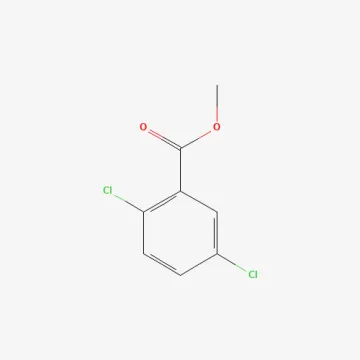
2,5-Dichlorobenzoic acid methyl ester
Description
Mode of action
Methyl 2,5-dichlorobenzoate derivatives belong to the synthetic auxin class of herbicides. These compounds mimic naturally occurring plant hormones, causing uncontrolled cell division and growth disruption within susceptible weed species.
Upon absorption through the foliage or roots, the chemical is translocated throughout the plant's vascular system to areas of active growth. This induces severe epinasty, stem twisting, and metabolic stress, ultimately leading to the plant's physiological collapse.
The systemic nature of this chemical group ensures that the herbicide reaches the root system, which is critical for the effective control of persistent perennial weeds. By exhausting the plant's energy reserves, the substance prevents recovery and regrowth.
The efficacy of these herbicides is highly dependent on environmental factors, including temperature and plant moisture levels. Optimal growing conditions maximize the speed of herbicide uptake and metabolic disturbance, leading to rapid necrosis of the target weed.
Structurally, the ester form of 2,5-dichlorobenzoic acid is designed for enhanced leaf penetration, allowing the active ingredient to pass through the cuticle more efficiently than its salt-based counterparts. This structural advantage ensures reliable performance in various field conditions.
What it targets
Herbicides based on 2,5-dichlorobenzoic acid derivatives are primarily used to control a broad spectrum of broad-leaved weeds. They are highly effective in cereal crops, which possess inherent tolerance to this mode of action when applied at recommended stages.
The primary targets include deep-rooted perennial weeds such as field bindweed and various thistle species. These weeds are traditionally difficult to manage, but the systemic movement of this chemical class provides a robust solution for field sanitation.
Furthermore, these compounds provide excellent control over problematic annual weeds, including common lambsquarter and knotweeds. The flexibility of these herbicides makes them a cornerstone of integrated weed management systems in modern farming.
- Cirsium arvense (Canada thistle).
- Convolvulus arvensis (Field bindweed).
- Chenopodium album (Common lambsquarter).
- Polygonum species (Knotweeds).
The selectivity of these herbicides is a significant agronomic advantage, allowing for effective weed suppression without damaging the primary cereal crop. Careful timing is essential to maintain this selectivity and avoid any potential crop stress.
Rates and timing
Application rates are determined by the weed growth stage and the specific infestation density of the field. Best results are consistently achieved when target weeds are in the early vegetative stage, typically under 15 cm in height.
The use of adjuvants or surfactants is highly recommended to improve droplet retention on waxy leaves. The spray solution must be prepared using high-quality water, ensuring the concentration meets label requirements for the specific crop.
Timing the application with the cereal crop's development is crucial; usually, this falls between the tillering phase and the jointing stage. Applications outside this window can pose a significant risk of phytotoxicity to the crop.
Optimal application temperature ranges from 15 to 25 degrees Celsius, as this supports active herbicide translocation. Extreme temperatures or drought conditions can reduce efficacy and may require adjustments to prevent crop injury.
Proper calibration of spraying equipment is necessary to ensure uniform coverage across the leaf surface. Using appropriate nozzles at the correct operating pressure helps manage the distribution of the chemical, ensuring maximum performance across the entire treated area.
Restrictions
The primary concern regarding the use of these herbicides is their high activity against non-target broad-leaved crops. Precautions must be taken to prevent spray drift during windy conditions to protect neighboring vegetable or legume fields.
Application should be avoided if rainfall is imminent, as wash-off can decrease herbicidal activity and lead to environmental runoff. A rain-free period of at least several hours following the application is recommended.
Due to potential persistence in the soil, rotation intervals for sensitive succeeding crops must be observed. Furthermore, safe buffer zones around water bodies are mandatory to protect aquatic life from chemical exposure.
Personnel handling these compounds must use adequate personal protective equipment (PPE). Preventing direct skin contact or inhalation is essential for maintaining occupational safety standards during the mixing and spraying process.
Decontamination of spray equipment is a critical step after completion of the work. Using effective cleaning agents minimizes the risk of residue transfer, preventing damage to sensitive crops in subsequent spraying operations.
Status in the European Union
Approved in the EU
- CAS number
- 2905-69-3
- Category (EU)
- FU - Fungicide
- Approved from
- 01.09.2009
- Approval until
- 30.11.2026
EU status is for reference only and does not replace national registration in your country.