
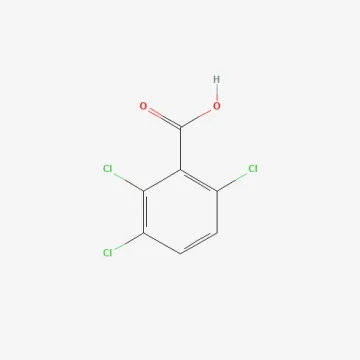
2,3,6-TBA
Description
Mode of action
2,3,6-TBA (2,3,6-trichlorobenzoic acid) is a systemic herbicide belonging to the benzoic acid chemical class, which acts as a synthetic auxin mimic.
Upon application, the active ingredient is rapidly absorbed by both foliage and roots, translocating throughout the weed's vascular system to reach the meristematic tissues.
It causes abnormal growth patterns by disrupting cell division and nucleic acid synthesis, leading to twisting, swelling, and eventual necrosis of the plant.
The substance also exhibits significant residual soil activity, providing control over newly germinating weed seeds within the treated area for a certain period.
Its effectiveness is highly dependent on the plant's metabolic activity, ensuring that the compound is distributed efficiently to all parts of the weed, including underground storage organs.
What it targets
2,3,6-TBA is primarily used to control a broad spectrum of broad-leaved weeds, with a specific focus on tough, deep-rooted perennial species.
It is highly effective against plants that possess significant vegetative reproduction capabilities, making it a key tool for managing persistent weed infestations.
The herbicide is particularly useful in controlling woody species and deep-rooted perennials that are often resistant to standard contact or hormonal herbicides.
Its ability to reach underground rhizomes and root systems provides superior long-term control compared to treatments that only affect the aerial parts of the plant.
- Canada thistle
- Field bindweed
- Russian knapweed
- Common lambsquarters
- Wild buckwheat
Rates and timing
Application rates are determined by the weed density, growth stage, and soil properties to ensure maximum efficacy while minimizing environmental impact.
The most effective treatment timing is during the active growth phase of the weeds, particularly before they reach the flowering stage, to ensure systemic movement to the roots.
When used in tank mixtures with other herbicides, 2,3,6-TBA helps overcome resistance and provides a wider window of control for diverse weed communities.
Environmental conditions such as temperature and humidity must be optimal during application to prevent volatility and ensure consistent absorption by the target plants.
It is crucial to avoid application during high-wind conditions to prevent spray drift, which could lead to unintended damage to neighboring non-target crops.
Restrictions
Due to its high herbicidal activity, 2,3,6-TBA poses a risk of phytotoxicity to a wide variety of crops, including vegetables, legumes, and oilseed crops.
Growers must carefully observe plant-back restrictions in their crop rotation plan, as the active ingredient can persist in the soil and affect subsequent plantings.
Personnel handling the chemical must wear appropriate personal protective equipment (PPE) and follow all safety protocols to minimize exposure risks.
Storage of the product should be in a secure, climate-controlled facility, ensuring that containers are tightly sealed and protected from extreme environmental conditions.
Waste management must comply with local regulations, including the proper disposal of empty containers and any remaining spray solution to protect water and soil quality.
Status in the European Union
Not approved in the EU
- CAS number
- 50-31-7
EU status is for reference only and does not replace national registration in your country.