
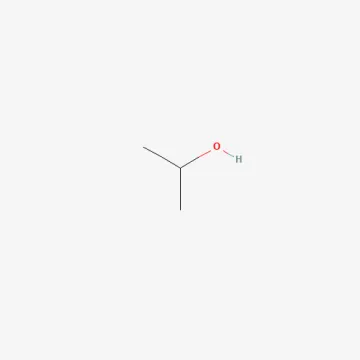
Isopropyl alcohol
Description
Mode of action
Isopropyl alcohol (propan-2-ol) is widely utilized in the agricultural sector as a multifunctional solvent and performance-enhancing adjuvant for plant protection products.
Its primary role is to serve as a co-solvent, ensuring that active ingredients remain stable and evenly distributed within concentrated formulations during storage.
By effectively lowering the surface tension of the spray solution, it allows for better spreading and wetting of the foliage surface upon application.
The substance facilitates the penetration of active ingredients through the waxy cuticle of leaves, significantly increasing the rate of herbicide or fungicide absorption.
It also enhances the compatibility of different chemicals in tank mixes, preventing the rapid precipitation or layering of inconsistent active ingredients.
What it targets
Isopropyl alcohol is used in a wide range of formulations including herbicides, fungicides, and insecticides to improve their biological efficacy.
It is particularly beneficial for crops that possess dense or waxy foliage, such as cereals, onions, and various horticultural plants.
In herbicide applications, it is essential for improving control over hard-to-kill weeds that have thick outer leaf layers resistant to traditional water-based sprays.
It is widely applied in systemic treatments where rapid translocation within the plant tissue is necessary for controlling deep-seated infections or infestations.
The substance is also utilized to ensure consistent performance of plant growth regulators under varying environmental conditions.
Rates and timing
The application rate of formulations containing isopropyl alcohol is strictly governed by the specific product label and the manufacturer's technical recommendations.
Users should follow the guidelines for tank mixture ratios to ensure that the chemical balance remains optimal for crop safety and target efficacy.
Application timing must align with the growth stages defined for the active ingredient it supports within the specific agrochemical formulation.
For best results, applications should be carried out during calm weather, avoiding high mid-day temperatures that could accelerate the evaporation of the solvent.
It is critical to maintain consistent agitation in the spray tank to ensure that the emulsion remains stable and the chemical concentrations are uniform.
Restrictions
Isopropyl alcohol is a highly flammable solvent, necessitating strict adherence to fire safety protocols during transport, storage, and handling.
Users must wear appropriate personal protective equipment (PPE), including chemical-resistant gloves and goggles, to avoid irritation and direct exposure.
It should not be mixed with strong oxidizing agents, which may result in dangerous chemical interactions or the degradation of the active ingredient.
High concentrations of this substance applied under intense sunlight or heat may lead to phytotoxicity or leaf burn in sensitive crop varieties.
- Store in original, tightly sealed containers in a cool and well-ventilated area.
- Ensure all equipment is properly grounded to prevent static sparks during loading.
- Always perform a jar test for compatibility before combining with multiple agrochemicals.
Status in the European Union
Not approved in the EU
- CAS number
- 67-63-0
EU status is for reference only and does not replace national registration in your country.