
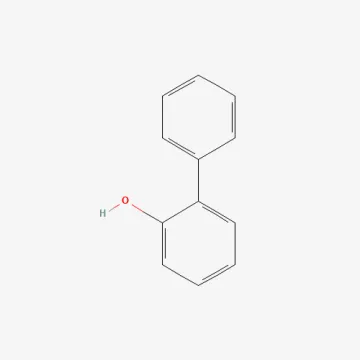
2-Phenylphenol
Description
Mode of action
2-Phenylphenol is a chemical compound belonging to the phenol class, widely utilized as an effective fungicide and antimicrobial agent in agriculture. It plays a critical role in preserving the quality of agricultural commodities.
The mode of action involves disrupting the permeability of fungal cell membranes. By penetrating the fungal cell, the substance alters the internal chemical balance and causes the denaturation of essential proteins, leading to cell death.
This compound effectively halts the enzymatic processes of pathogens, which prevents mycelial growth and spore production. Consequently, it acts as a robust barrier against the rapid spread of infections within a storage lot.
Due to its chemical stability, 2-phenylphenol provides a long-lasting protective effect on the surface of treated produce. It effectively creates an invisible film that protects against external fungal contamination.
In various agricultural applications, 2-phenylphenol is often formulated as a sodium salt, which improves its water solubility, ensuring consistent and uniform application during industrial processing.
What it targets
The primary use of 2-phenylphenol is the post-harvest protection of various fruits, vegetables, and tubers. It is highly effective in preventing the development of decay caused by fungi during logistics and long-term storage.
It displays high activity against common post-harvest pathogens, such as the Penicillium species, which are notorious for causing green and blue molds on citrus, apples, and pears.
The fungicide also combats Botrytis cinerea (gray mold), a major threat to soft fruits, grapes, and various greenhouse-grown vegetables, significantly reducing spoilage rates in warehouses.
Besides direct fruit treatment, it is used for disinfecting storage facilities, transit containers, and specialized agricultural machinery, which helps maintain a low microbial load in the production environment.
Furthermore, it is sometimes applied to seed material to protect tubers and bulbs from soil-borne diseases, ensuring higher survival rates and better vigor upon planting.
Rates and timing
Application rates for 2-phenylphenol are determined by the specific crop type and the chosen method of treatment, which typically includes dipping, spray misting, or fogging techniques in climate-controlled chambers.
It is essential to achieve a uniform application across the entire surface of the produce. Even small, untreated areas can become entry points for spores, rendering the entire treatment less effective.
Treatment should be applied as soon as possible after harvesting. Prompt application is vital because it neutralizes spores before they penetrate deep into the tissues through micro-cracks or natural openings.
When used for warehouse disinfection, strict timelines between the decontamination process and the product loading must be followed to ensure the complete dissipation of any chemical residues.
Careful calibration of equipment is necessary to ensure the correct dosage. Excessive application can lead to phytotoxicity, potentially damaging the skin or peel of sensitive fruits and vegetables.
Restrictions
2-Phenylphenol is considered moderately hazardous, necessitating the use of personal protective equipment (PPE) such as chemical-resistant gloves, goggles, and respiratory masks to prevent skin and eye irritation.
Operators must adhere to mandatory pre-harvest or pre-consumption intervals. These safety windows are designed to ensure that residue levels remain well within the acceptable regulatory limits for consumers.
Proper ventilation is mandatory when treating closed storage facilities. Personnel must wait until the substance has fully dissipated before entering the area without the required protective equipment.
Environmental precautions must be taken to prevent any runoff into sewage systems, soil, or natural water bodies, as the substance can be toxic to aquatic life if discharged in large quantities.
Storage of the concentrate should be handled in accordance with local safety regulations, keeping the chemical in a cool, well-ventilated area away from direct sunlight and incompatible materials.
Status in the European Union
Approved in the EU
- CAS number
- 90-43-7
- Category (EU)
- FU - Fungicide
- Approved from
- 01.01.2010
- Approval until
- 15.11.2027
- ADI
- 0.4 mg/kg bw/day
- ARfD
- Not appl.
- AOEL
- 0.4 mg/kg bw/day
EU status is for reference only and does not replace national registration in your country.