
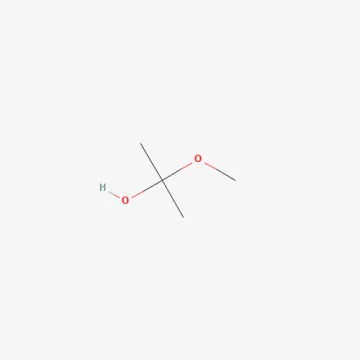
2-Methoxypropan-2-ol
Description
Mode of action
In modern agronomic practice, 2-Methoxypropan-2-ol is classified not as an active substance with fungicidal or herbicidal effects, but as a key formulation component.
This compound belongs to the glycol ether class, which is widely used in pesticide formulations as a highly effective solvent.
The primary function of this substance is to ensure the stability of active components in the spray solution, preventing crystallization or precipitation.
Due to its chemical structure, it facilitates the dissolution of lipophilic active ingredients, which is critical for the development of emulsifiable concentrates.
The substance acts as a synergist, improving the penetration of the pesticide through the plant cuticle, thereby increasing the overall biological activity of the product.
What it targets
This compound is not used against specific pathogens or pests, as it lacks direct toxicity towards agricultural targets.
Its intended purpose is the optimization of the physical and chemical properties of herbicide, insecticide, and fungicide formulations with complex chemical structures.
The use of products containing this substance is aimed at controlling a wide spectrum of weeds, insect pests, and diseases in agricultural crops.
The auxiliary role of this component allows for a more uniform distribution of the active ingredient across the leaf surface of the treated crop.
The efficacy of the application depends directly on the quality of the primary pesticide that incorporates 2-methoxypropan-2-ol.
Rates and timing
Application rates for 2-Methoxypropan-2-ol are determined exclusively by the manufacturer of the finished product, which contains this substance as an auxiliary agent.
Agronomists must strictly adhere to the usage regulations of the specific pesticide stated on the product label, ensuring concentration limits are not exceeded.
Timing for treatments with products based on these solvents must align with the growth stages of the target pest and crop as specified in the main pesticide instructions.
It is crucial to monitor the quality of water used for preparing tank mixes to ensure the component maintains its effective solvency properties.
When preparing multi-component tank mixes, compatibility with other agrochemicals must be considered to prevent phytotoxicity.
Restrictions
Handling products containing glycol ether derivatives requires strict adherence to safety protocols and the use of personal protective equipment.
Avoid contact of the concentrate with skin and mucous membranes, as the substance can cause irritation.
Storage should be in original containers, away from heat sources and direct sunlight, while maintaining appropriate temperature conditions.
Do not dispose of surplus spray solution in water bodies or soil, as this may harm aquatic organisms and the surrounding environment.
- Use only properly functioning spraying equipment
- Ensure thorough agitation of the solution before starting operations
- Monitor the pH level of the working fluid
Status in the European Union
Not approved in the EU
EU status is for reference only and does not replace national registration in your country.