
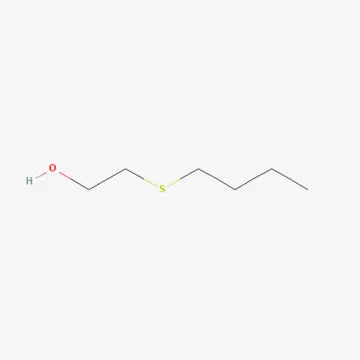
2-Hydroxyethyl butyl sulfide
Description
Mode of action
2-hydroxyethylbutylsulfide belongs to a class of sulfur-organic compounds utilized primarily as specialized additives or active repellent agents within agricultural pest management systems.
The mode of action relies on the substance's ability to interfere with the chemosensory receptors of target pests, effectively acting as an olfactory repellent rather than a lethal contact poison.
By creating a volatile barrier, the compound prevents insects from identifying potential host plants or sites for reproduction, thereby reducing the overall pest pressure on a given plot.
It is distinguished by its high effectiveness in non-lethal pest management, which is essential for maintaining the balance of beneficial insect populations in an integrated pest management (IPM) program.
The compound's chemical stability allows it to maintain a consistent barrier effect for a specified duration, provided that environmental conditions remain within the range recommended for application.
What it targets
The application of this compound is aimed at mitigating the nuisance caused by flying insects and parasites that threaten the productivity of agricultural sectors and livestock health.
Primary targets include:
- Biting flies and midges affecting livestock.
- Flying insects that act as vectors for various plant pathogens.
- Pests that colonize structures, greenhouses, or storage facilities.
While not a standard insecticide, it serves as a critical component in mixtures designed to discourage pest colonization, protecting both crops and livestock without the immediate reliance on toxic chemical sprays.
This group of compounds is particularly valued in areas where high insect activity necessitates frequent, non-toxic intervention methods to ensure worker comfort and animal welfare.
Rates and timing
Application rates for 2-hydroxyethylbutylsulfide must strictly adhere to the manufacturer's technical specifications to ensure that the repellent effect is achieved without causing phytotoxicity.
The timing of application should align with the anticipated peaks of pest activity, ensuring that the protective barrier is established before the primary infestation period begins.
Workers must prepare the solution in properly ventilated areas, ensuring that the concentration of the sulfur-based agent is accurately balanced with water or the specified carrier liquid.
Frequent re-application is often required depending on climatic conditions, as high temperatures or heavy precipitation can significantly accelerate the evaporation or washout of the active ingredient.
Effective distribution is best achieved using standard spray equipment during calm weather conditions to ensure even coverage across the targeted vegetation or infrastructure.
Restrictions
Strict personal protective equipment (PPE) protocols, including the use of respiratory protection and chemical-resistant gloves, are mandatory when handling this substance due to its pungent odor and potential to irritate mucous membranes.
The substance must be stored in a cool, dry place away from oxidizing agents and direct sunlight, as these factors can lead to chemical degradation or unwanted reactions in the concentrate.
Environmental safety protocols must be followed strictly; all waste material and rinse water should be contained to prevent runoff into irrigation channels, lakes, or groundwater sources.
Prior to broad-spectrum use, a small-scale trial is recommended on sensitive crops to confirm that the application will not cause leaf spotting or other forms of localized plant stress.
Compliance with local agricultural regulations regarding the use of sulfur-containing additives is essential to maintain safety standards and ensure the legal application of the chemical on the farm.
Status in the European Union
Not approved in the EU
EU status is for reference only and does not replace national registration in your country.