
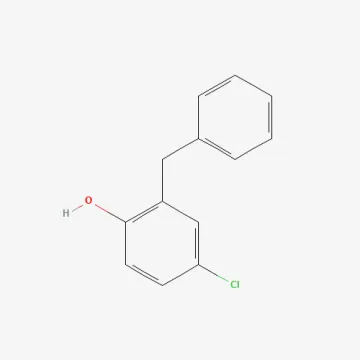
2-Benzyl-4-chlorophenol
Description
Mode of action
2-Benzyl-4-chlorophenol is a chemical compound belonging to the chlorinated phenol class, widely utilized as an effective disinfectant and antimicrobial agent in agricultural environments.
The mechanism of action involves the disruption of microbial cell membranes. By penetrating the lipid bilayer, the compound causes denaturation of essential proteins, leading to the rapid inactivation of bacteria, fungi, and specific mold spores.
This substance is characterized by significant residual activity. Once applied, it forms a protective film on surfaces, which continues to inhibit microbial growth, providing a long-term barrier against contamination.
It acts primarily as a contact disinfectant. It does not possess systemic activity within crops and is therefore not intended for direct application to plant tissues during the growing season.
The compound remains effective across various environmental conditions, making it an ideal choice for sanitation in both cold storage facilities and high-humidity greenhouse environments.
What it targets
The primary use is the sanitization of greenhouse structures, glasshouses, and indoor growing facilities. It effectively eliminates pathogens that harbor on support structures, preventing the carry-over of diseases from one season to the next.
It is extensively used to decontaminate agricultural containers, crates, and harvesting equipment. Preventing fungal colonization on these surfaces is crucial to maintaining the quality of stored fruits and vegetables.
The agent is suitable for cleaning hydroponic systems, including irrigation pipes, pumps, and nutrient tanks. It prevents biofilm formation, ensuring consistent water quality for crop development.
It is also used for the disinfection of gardening tools such as pruning shears, knives, and graft equipment. This practice is essential to prevent the mechanical transmission of viruses and bacteria between plants.
- Control of mold and mildew on greenhouse surfaces.
- Sanitation of post-harvest storage facilities.
- Decontamination of nursery irrigation hardware.
Rates and timing
Application rates for 2-Benzyl-4-chlorophenol depend on the specific formulation and the nature of the surface being treated. Generally, concentrations ranging from 0.5% to 2% are effective for surface disinfection.
Application is performed by spraying or wiping surfaces until they are thoroughly saturated. Mechanical cleaning of debris before application significantly improves the disinfectant's overall efficacy.
A sufficient contact time is required to ensure full pathogen inactivation. It is recommended to leave the treated surfaces wet for the duration specified by the product label before rinsing or drying.
Adequate ventilation is necessary after application, especially in enclosed spaces like greenhouses. Planting should only occur once the product has fully dried and the area has been aired out to prevent any phytotoxic residual effects.
Highly porous surfaces, such as untreated wood, require larger volumes of the solution compared to non-porous materials like plastic, metal, or glass surfaces.
Restrictions
Personal Protective Equipment (PPE) including gloves, eye protection, and respiratory masks is mandatory when handling this substance to avoid irritation and potential systemic exposure.
Direct application to growing crops is strictly prohibited. The compound is non-selective and can cause severe chemical burns to plant foliage, flowers, and developing fruits.
Environmental safety protocols must be followed. The compound is toxic to aquatic life; therefore, it must never be disposed of in natural water bodies, streams, or unprotected sewage systems.
Storage must be in a cool, dry, and secure location away from food, animal feed, and children. The container must be kept tightly closed to prevent degradation and unintended exposure.
In the event of accidental skin or eye contact, flush immediately with large amounts of water and seek medical advice. Always refer to the Safety Data Sheet (SDS) for detailed emergency protocols.
Status in the European Union
Not approved in the EU
- CAS number
- 120-32-1
EU status is for reference only and does not replace national registration in your country.