
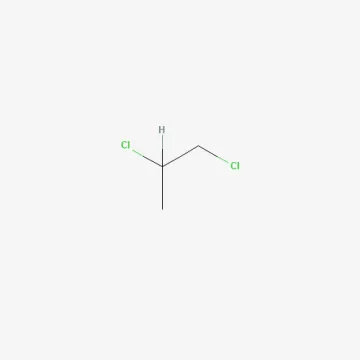
1,2-Dichloropropane
Description
Mode of action
1,2-Dichloropropane is a chlorinated hydrocarbon compound widely recognized in agricultural practice as a soil fumigant. It operates primarily through its high volatility, which enables it to disperse effectively within the interstitial air spaces of the soil.
Upon application, the substance undergoes a phase transition to gas, penetrating the soil profile to reach subterranean targets. Its mode of action involves disrupting the biological pathways and metabolic cycles of pests through enzymatic interference.
The efficiency of 1,2-dichloropropane is heavily dictated by soil physical properties, including moisture content, temperature, and bulk density. Optimal soil conditions are necessary to ensure that the fumigant reaches all infested zones before diffusing into the atmosphere.
The substance acts as a systemic toxin to target organisms, primarily affecting their nervous systems and respiratory cycles. By causing acute toxicity to pests, it provides a "clean slate" for establishing healthy crop stands in previously infested fields.
Because of its volatile nature, a sufficient waiting period is required post-application for aeration. This process facilitates the removal of residual gas, ensuring that the soil is safe for subsequent seeding and minimizing any phytotoxic risks to crops.
What it targets
1,2-Dichloropropane is primarily utilized to manage persistent soil-borne threats that cannot be easily controlled by conventional pesticides. Its spectrum of activity is particularly effective against plant-parasitic nematodes.
The substance also exhibits control over various soil-dwelling insects, such as wireworms and white grubs, which are known for causing significant damage to the root systems of various technical and vegetable crops.
Furthermore, the fumigant can provide secondary benefits by suppressing certain soil-borne fungal pathogens, thereby reducing the incidence of root rot diseases in seedlings and ensuring more uniform crop emergence.
- Plant-parasitic nematodes
- Soil-dwelling insect larvae
- Symphylids and micro-arthropods
This fumigant is a critical tool for high-value agricultural systems, enabling producers to sanitize the growing environment and prevent early-stage damage from underground pest populations.
Rates and timing
The application rate for 1,2-dichloropropane is determined based on soil analysis and the specific pest pressure identified. It is typically injected at a depth of 20 to 30 cm using specialized fumigation rigs to ensure thorough coverage.
Timing is critical; the soil must be warm and moist enough to facilitate gas diffusion but not waterlogged, as excess moisture traps the gas and impedes its movement through the soil profile.
To maximize exposure time, the soil surface is often compacted or covered with plastic mulch immediately after application. This "sealing" technique keeps the fumigant concentration at effective levels for the required duration.
A waiting period of 2 to 4 weeks is generally required between fumigation and planting. This interval is necessary to allow for complete natural degassing of the soil, preventing chemical toxicity to seeds or transplant roots.
Application should be avoided during high wind conditions or on soils with very high organic matter, which can absorb the chemical and reduce its efficacy, requiring higher doses that may not be environmentally or economically sustainable.
Restrictions
Operating with 1,2-dichloropropane requires stringent safety protocols. Due to its toxicity, workers must wear appropriate personal protective equipment, including respirators, chemical-resistant clothing, and gloves.
Application near residential areas, water bodies, or livestock grazing areas is strictly prohibited to prevent human or animal exposure. Compliance with established safety zones and signage is mandatory during and after application.
Personnel should be monitored for signs of exposure, such as dizziness or respiratory irritation. In the event of exposure, the affected individual must be removed to fresh air immediately, and medical assistance must be sought.
The product must be stored in original, sealed containers in a cool, ventilated area isolated from heat, sparks, or open flames to prevent accidental ignition or degradation.
Proper disposal of empty containers and leftover product must comply with local environmental regulations to avoid contamination of surface and groundwater resources, ensuring no chemical residues remain in the environment.
Status in the European Union
Not approved in the EU
- CAS number
- 78-87-5
EU status is for reference only and does not replace national registration in your country.