
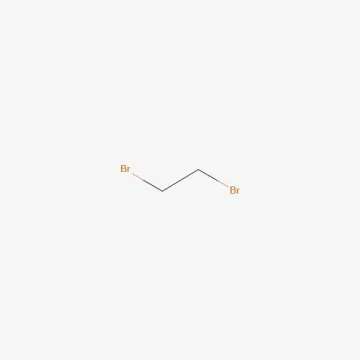
1,2-Dibromoethane
Description
Mode of action
1,2-Dibromoethane, also known as ethylene dibromide, belongs to the class of halogenated aliphatic hydrocarbons and functions as a broad-spectrum soil fumigant.
Its primary mechanism of action involves high vapor pressure, allowing it to penetrate soil pores and permeate through the substrate where pests reside.
The substance acts as a metabolic toxin, disrupting vital enzymatic pathways in nematodes, insects, and other harmful organisms found in the soil.
Once introduced into the ground, the active agent provides a rapid kill effect on various developmental stages, including eggs and larvae, preventing further population outbreaks.
The efficiency of the compound is largely dependent on the soil's permeability, which facilitates the uniform distribution of toxic vapors within the target root zone.
What it targets
The compound is primarily utilized to eradicate soil-borne nematodes, which are significant pests causing severe damage to vegetable and orchard crops.
It is also effective against various soil-dwelling insects such as wireworms, grubs, and other subterranean pests that attack crop root systems.
Beyond insect and nematode control, 1,2-dibromoethane is used for sterilizing soil and potting substrates from persistent soil-borne fungal pathogens.
Its application is particularly common in intensive greenhouse production where soil sanitation is critical for ensuring sustainable crop growth cycles.
The fumigant is employed as a preventive measure to secure high-value horticultural yields against the cumulative damage of soil pathogens.
Rates and timing
Application rates of 1,2-dibromoethane must be precisely calibrated based on soil texture, moisture levels, and the degree of pest infestation.
Heavier soil types require significantly higher doses to achieve effective concentration levels, while lighter sandy soils demand lower amounts to prevent rapid leaching.
Application is performed via soil injection, followed by immediate surface sealing or covering to prevent the gas from escaping into the atmosphere.
A mandatory waiting period is required before any planting activities can begin to ensure the complete dissipation of the fumigant from the soil profile.
The length of this interval depends on ambient temperature and soil aeration, as lower temperatures can slow the rate of gas diffusion significantly.
Restrictions
1,2-Dibromoethane is highly toxic and poses severe health risks, necessitating the use of specialized respiratory and skin protection for all handlers.
The use of this substance is strictly regulated and often banned or severely restricted globally due to its potential carcinogenicity and persistence in groundwater.
Improper application can lead to significant phytotoxicity, where remaining residues in the soil can damage or kill newly planted crops.
Environmental regulations strictly govern its use to prevent contamination of aquifers, as the compound is mobile and potentially harmful to aquatic ecosystems.
Agronomists must conduct residue testing prior to planting to confirm that the fumigant concentration has fallen below safety thresholds.
Status in the European Union
Not approved in the EU
- CAS number
- 106-93-4
EU status is for reference only and does not replace national registration in your country.