
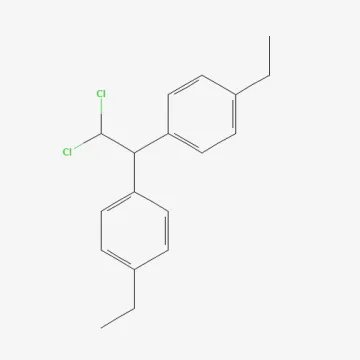
Perthane
Description
Mode of action
Pertan belongs to the group of organochlorine compounds, which exhibit a pronounced insecticidal effect. The mechanism of action on pests is based on disrupting the permeability of insect nerve cell membranes.
The substance affects the nervous system, causing prolonged depolarization of membranes followed by paralysis of the organism. This leads to the cessation of feeding and rapid death of pests shortly after contact with the preparation.
An important feature of this class is the contact pathway for entering the pest's body. Active components easily penetrate through the chitinous cover, ensuring effective control even at low dosages.
The preparation's effect persists for a certain period, creating a protective barrier on the surface of the treated crop. This allows for effective control of migratory insects during active flight periods.
Despite high specificity for the insect nervous system, the group is characterized by relatively low toxicity to warm-blooded animals compared to earlier organochlorine chemistry analogs.
What it targets
This group of substances is primarily used to control a wide range of leaf-eating and sucking pests. The main targets are Lepidoptera, Coleoptera, and certain species of mites.
Preparations based on Pertan are effective against various types of aphids, weevils, and caterpillars that damage plant vegetative organs. They show stable results in suppressing insect populations with high reproduction rates.
The use of agents from this group helps significantly reduce damage to fruits and leaves in horticulture and vegetable growing. Due to high lipophilicity, the active substances adhere well to the wax layer of crops.
Application is relevant for industrial crops and intensive horticulture to prevent pest outbreaks. It is important to note that preparations in this group are most effective during the initial stages of pest infestation.
The spectrum of application also covers the control of stored product pests, where long-lasting residual activity is required to protect commodities from insect damage.
Rates and timing
Application rates are determined based on the specific crop and threat level. Typically, the working solution is prepared considering the leaf surface area, which requires thorough wetting to achieve maximum effect.
Timing of treatments is tied to the phenophases of pest development. It is recommended to start spraying when the threshold population of insects is reached, which prevents critical crop damage.
The interval between repeated treatments should be at least 10–14 days to prevent the development of resistance in pest populations. It is necessary to rotate the use of Pertan with preparations from other chemical groups.
When working with water-based solutions, it is important to monitor pH levels, as high acidity or alkalinity of the medium can reduce the activity of the active substances. Using special adjuvants to improve coverage is recommended.
Field application requires the use of high-quality spraying equipment. The uniformity of droplet distribution is a decisive factor in successful crop protection against damage.
Restrictions
The main limitation is the prohibition of use during the active flight of bees and other beneficial entomophages. Pertan possesses significant toxicity to beneficial insects, requiring strict adherence to isolation periods.
Treatments near water bodies are prohibited due to potential danger to aquatic fauna. Substances in this group can accumulate in bottom sediments, therefore a protective buffer zone is necessary.
When working with these preparations, the use of personal protective equipment for skin and respiratory organs is mandatory. Contact with concentrated substances can cause allergic reactions or mucous membrane irritation.
Mixing with highly alkaline compounds or copper-based preparations without prior compatibility testing is not allowed. Incorrect order of mixing components may lead to a loss of efficacy of the entire tank mix.
Adherence to pre-harvest intervals is a critical requirement to ensure the safety of the final product. These figures are strictly regulated by regional agrochemical standards.
Status in the European Union
Not approved in the EU
EU status is for reference only and does not replace national registration in your country.