
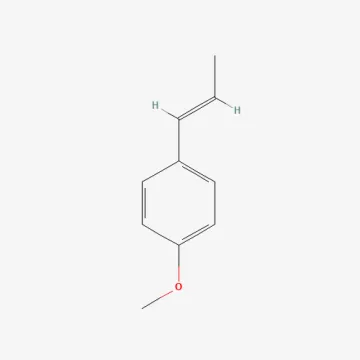
Anethole
Description
Mode of action
Anethole is an aromatic organic compound belonging to the phenylpropanoid class. It is a key component of essential oils extracted from crops such as anise, fennel, and star anise, which exhibits significant biological activity.
The mechanism of anethole's effect on pathogens and pests is based on its destructive influence on cell membranes. It disrupts the permeability of the lipid layer, leading to the death of fungal cells and the disruption of metabolic processes in insects.
As a natural pesticide, anethole acts as a contact agent. It rapidly penetrates the chitinous cover of insects or the spore walls of pathogens, causing a paralyzing effect or inhibiting the development of enzymatic systems.
The substance is characterized by low persistence in the environment, as it oxidizes and degrades rapidly under sunlight. This makes it a promising component for environmentally safe crop protection systems.
Anethole is often used as a synergist in combination with other biopesticides, enhancing their ability to penetrate plant tissues or pest cuticles.
What it targets
Anethole is primarily used in biopesticide formulations to control a wide range of agricultural pests. It demonstrates high efficacy against aphids, spider mites, and certain species of thrips.
As a fungicidal component, the substance effectively suppresses the growth of phytopathogenic fungi, particularly species of the genera Fusarium, Aspergillus, and Penicillium, which damage stored produce.
The use of anethole-based products is relevant in greenhouse farming for protecting vegetable crops from early-stage colonization by phytophagous insects.
Anethole also exhibits antifeedant properties—it suppresses the appetite of insects, causing them to cease feeding on treated plants and leave the area of impact.
The use of this substance helps reduce pest populations without developing resistance, which is frequently observed with the use of synthetic insecticides.
Rates and timing
The concentration of anethole in working solutions depends on the product's formulation and the type of crop being treated. Emulsifiable oil-based concentrates are most commonly used.
For preventative treatment of growing plants, solutions with an active ingredient content ranging from 0.1% to 0.5% are applied. It is essential to ensure uniform wetting of the leaf surface.
The frequency of application ranges from 2 to 4 times per season with an interval of 7–10 days, due to the rapid evaporation of the active ingredient from plant surfaces.
When protecting fruit and vegetable storage facilities, fumigation or aerosol spraying methods are used to create a protective barrier against decay-causing microorganisms.
The working solution must be prepared immediately before use, as the activity of essential oils can decrease over time due to oxidation during storage.
Restrictions
The main limitation is the photolability of anethole. It is recommended to perform treatments in the evening or morning to avoid rapid decomposition under ultraviolet light.
Strict temperature control is necessary: at temperatures above +30°C, the product's efficacy may decrease due to the high volatility of the active substance.
Anethole-based products do not have systemic action, so the quality of treatment depends directly on the thoroughness of covering the entire plant surface with the working solution.
While anethole is considered safe for humans and warm-blooded animals, personal protective equipment for respiratory and skin protection should be used when handling concentrated essential oils.
It is not recommended to mix anethole with highly alkaline products, as this can lead to chemical degradation of the active substance and loss of its biological efficacy.
Status in the European Union
Not approved in the EU
- CAS number
- 104-46-1
EU status is for reference only and does not replace national registration in your country.