
Pyrochroa coccinea
Pyrochroa coccinea
Description
How to identify
Pyrochroa coccinea, commonly known as the black-headed cardinal beetle, belongs to the Pyrochroidae family of the order Coleoptera. Adult beetles are characterized by a flattened body, measuring 14–18 mm in length, with vibrant red wing covers and a black head.
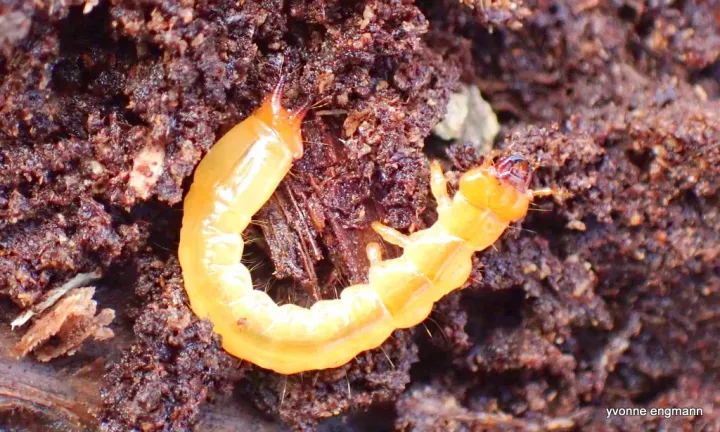
Male beetles exhibit prominent serrated or comb-like antennae used for mate searching, while females have more simple, saw-toothed antennae. The larvae are flat, pale, and possess distinct chitinous plates, reaching up to 25 mm as they mature.
This beetle is secretive, preferring the environment beneath the bark of decaying deciduous trees or within rotting wood. Their bright red color serves as a warning signal (aposematism) to predators, indicating they are toxic or unpalatable.
The insect's life cycle is strictly dependent on dead or decaying hardwood, such as oak, beech, lime, and birch. Adults are frequently found on flowers, feeding on pollen and nectar, without causing harm to living plant tissues.
It is important to distinguish Pyrochroa coccinea from related species like Pyrochroa serraticornis, although their ecological roles remain quite similar, with the former being common in temperate woodland areas.
What it damages
The primary damage is caused by the larvae, which feed on the decaying inner bark and wood of deciduous trees. They function as xylophages, breaking down the woody structure of trees that are already dying.
In garden and forestry contexts, this beetle is rarely categorized as a primary pest because it colonizes weakened or already dead trees, effectively accelerating the natural process of decomposition.
In rare instances of population outbreaks in stressed forest stands, larvae may consume the cambium of the lower trunk, which can lead to the premature wilting of individual branches or overall tree decline.
For most decorative gardens, the impact of the cardinal beetle is considered negligible. It acts as an essential forest sanitary agent, participating in organic waste breakdown and nutrient cycling.
However, the presence of a high density of these beetles may act as an indicator of poor tree vitality, signaling a need for an arborist's inspection to assess overall health.
When it appears
Adult beetles typically appear in May and June, coinciding with their active mating and dispersal phase. They are most visible on sunny days, resting on bark or foraging on flowering vegetation.
The lifespan of an adult beetle is relatively short, lasting only a few weeks, during which the female oviposits into crevices in the bark or damaged woody surfaces.
Larvae require one or two years to complete their development, continuously feeding on decomposing wood and creating complex tunnels that serve as habitats for various other microorganisms and insects.
Overwintering occurs within the heartwood, where larvae bury themselves deep inside the tree to protect against freezing temperatures. Pupation takes place in the spring, starting the life cycle anew.
Insect activity is highly sensitive to climatic variables; cold and wet weather conditions can delay the peak emergence of adults by several weeks.
Signs of infestation
The primary sign of the presence of Pyrochroa coccinea is the observation of adults on tree trunks or foliage during late spring. Their conspicuous red color makes them quite easy to spot.
Inspecting dead or dying trees by peeling back loose bark can reveal the presence of flat larvae, which feature a distinct dark, bifurcated spine on their final body segment.
The accumulation of woody debris and winding tunnels within decaying wood also points to larval activity, as they loosen the bark and underlying wood tissues.
Secondary signs include damage from other wood-boring insects, which often colonize the wood after the cardinal beetle larvae have started the degradation process, creating a micro-environment.
The lack of significant damage to healthy plant tissues is a key indicator that distinguishes this species from aggressive wood pests, such as bark beetles or longhorn beetles.
Control measures
Specialized chemical control measures for Pyrochroa coccinea are generally not recommended, as the insect serves as a beneficial component of the natural ecosystem.
The most effective management strategy is the maintenance of proper agricultural practices, such as removing fallen branches, decaying stumps, and diseased wood that provide breeding grounds for the larvae.
Maintaining high tree vitality, performing regular pruning, and treating trunk wounds immediately will significantly reduce the tree's attractiveness to egg-laying females.
- Regular sanitary thinning of woody stands.
- Removal of dead wood and stumps from the garden area.
- Manual collection of larvae during thinning operations.
- Using sticky traps or pheromone monitors for population density studies.
Insecticide application is only justifiable in high-value decorative nurseries where cosmetic damage must be avoided, and it should only be performed by professionals following strict environmental guidelines.
Taxonomy
- Latin name
- Pyrochroa coccinea
- Order
- Coleoptera (beetles)
- Family
- Pyrochroidae
- EPPO code
- PYOCCO
Discussion
No discussions yet — be the first.