
Shining flower beetle
Phalacrus corruscus
Description
How to identify
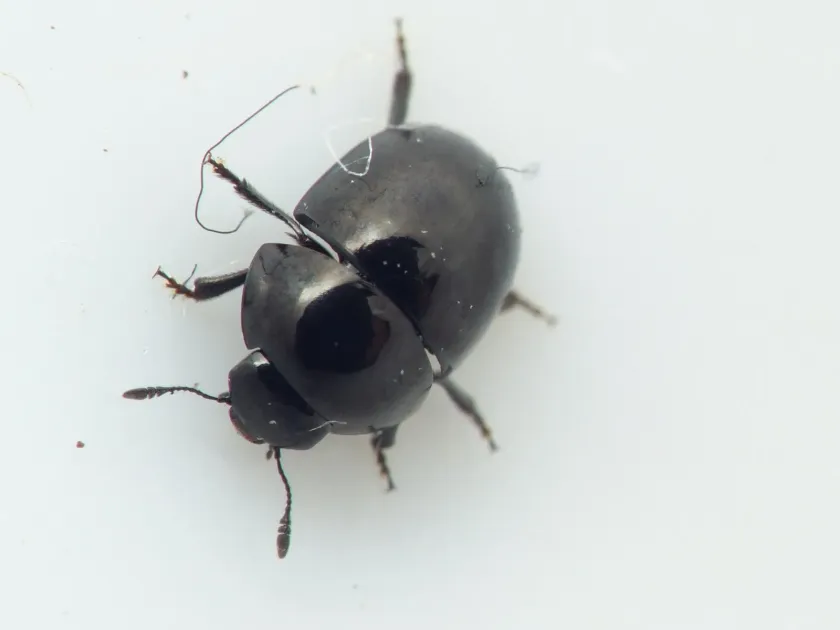
The shining flower beetle (Phalacrus corruscus) belongs to the family Phalacridae, order Coleoptera. It is a small insect characterized by its compact, oval, and highly convex body shape.
Adult beetles typically measure 2 to 3 mm in length and possess a deep black, glossy surface that reflects light, making them easy to identify under magnification.
The larvae of this beetle are small, white to yellowish, and have a cylindrical body form, adapted for living and feeding within flower heads.
These insects are highly agile; however, when disturbed, they exhibit a typical defensive behavior by pulling their antennae and legs close to the body and becoming immobile.
The species is widespread in temperate climates and overwinters in the adult stage, hiding in soil cracks or beneath plant debris.
What it damages
The primary hosts for Phalacrus corruscus are plants within the Asteraceae family, with sunflower being the most economically significant crop impacted.
Adults and larvae concentrate their feeding activity on the flower heads, where they consume pollen and destroy the florets, severely hindering the pollination process.
This feeding behavior leads to significant seed yield reduction, often resulting in empty or undersized achenes (seeds) within the sunflower head.
Beyond the direct consumption of plant tissues, the presence of the beetle can facilitate the entry of secondary pathogens, such as fungi, into the damaged flower head.
In cases of severe infestation, the cumulative damage can lead to substantial losses in both the quantity and the overall quality of the sunflower harvest.
When it appears
The emergence of overwintering adult beetles generally occurs in late spring, as temperatures rise sufficiently to trigger metabolic activity.
Peak infestation levels are observed during the flowering period of the sunflower, as the abundance of pollen provides an ideal nutritional source.
The life cycle typically completes one generation per year, with the insects transitioning into diapause as the host plant reaches maturity.
Agronomic field scouting is most effective during the blooming phase, when the visual presence of beetles in the flower heads is highest.
Weather conditions, particularly sustained warmth and humidity, can influence the development rate and the duration of the reproductive phase of the beetle.
Signs of infestation
The presence of the pest is indicated by the accumulation of small, black, shiny beetles within the sunflower heads during blooming.
Close inspection of the florets reveals visible signs of damage, such as missing anthers and localized browning of the floral parts.
An uneven distribution of developed seeds, often manifesting as patches of barren or poorly formed achenes, is a common indicator of larval feeding.
The buildup of larval waste products within the flower head creates a moisture-rich environment that often promotes the growth of mold or rot.
In many cases, the physical distortion of the floral disc and the presence of small entry holes are clear signals of recent insect activity.
Control measures
Managing the shining flower beetle requires a combination of good agricultural practices and timely intervention based on scouting results.
Cultural control strategies, such as deep autumn plowing, effectively reduce the number of over-wintering adults by destroying their soil habitats.
Maintaining crop rotation and managing weeds from the Asteraceae family nearby are essential to reduce local pest pressure.
Chemical control should be employed strategically, targeting the population only if economic thresholds are exceeded during the sensitive flowering stage.
- Regular monitoring using yellow sticky traps in the field.
- Avoid continuous cropping of sunflowers on the same land.
- Select sunflower hybrids with higher resistance or uniform flowering times.
Taxonomy
- Latin name
- Phalacrus corruscus
- Order
- Coleoptera (beetles)
- Family
- Phalacridae
- EPPO code
- PHAAFI
Discussion
No discussions yet — be the first.