
Shining flower beetle
Olibrus millefolii
Description
How to identify
The Shining flower beetle (Olibrus millefolii) belongs to the family Phalacridae within the order Coleoptera. These are very small beetles, typically measuring between 2 and 3 millimeters in length.
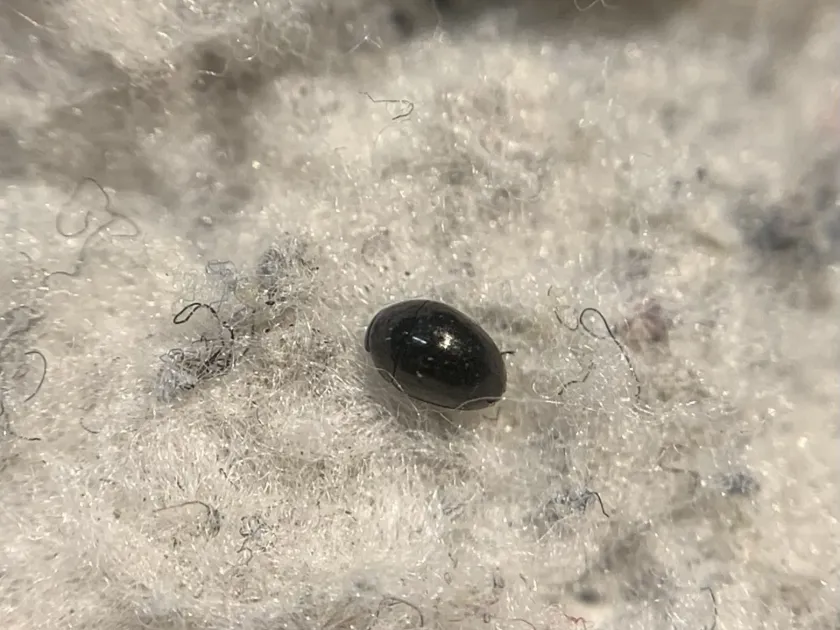
The insect's body has a distinctive oval and highly convex shape, resembling a small seed or droplet. Its coloration is usually a glossy black or dark brown, with smooth and highly reflective elytra surfaces.
The head is small and partially retracted into the pronotum, while the antennae are clubbed at the ends. The larvae of this species are also specific, living cryptically within the floral structures of their host plants.
A key trait of this family is their close association with the flower heads of various Asteraceae plants. The adults are strong fliers, which allows them to spread rapidly across fields and gardens in search of food.
Precise identification of this species often requires microscopic examination of genital structures, as many members of the family Phalacridae appear morphologically very similar to the naked eye.
What it damages
The primary food source for this pest is plants from the family Asteraceae, particularly various species of yarrow (Achillea), which gives the species its name.
Adult beetles and their larvae congregate within flower heads, where they feed on pollen and developing seeds, causing direct damage to the plant's reproductive organs.
In addition to wild yarrow, this beetle can infest ornamental varieties of Asteraceae, especially during periods of mass reproduction when the population density becomes high.
The damage manifests as undeveloped seeds and reduced seed viability, which is particularly concerning in nurseries or areas where plant propagation is carried out through seeds.
In dry summer conditions, the pest can cause premature wilting of flower heads due to the high concentration of insects consuming the limited resources of the floral disks.
When it appears
The life cycle of Olibrus millefolii is closely tied to the flowering phenology of its host plants, which generally occurs during the summer months, from June to August.
Adult beetles overwinter in various sheltered environments, including the topsoil, under leaf litter, or in dried plant debris, where they survive the cold season.
In the spring, as temperatures stabilize, the beetles emerge from diapause and begin feeding on early-season Asteraceae to build up energy for the breeding season.
Mating and egg-laying occur directly on or near the flower buds, ensuring that the emerging larvae have immediate access to the necessary nutrients for their development.
Depending on the climatic zone, one or two generations may occur per season, necessitating regular monitoring of the host plants throughout the peak flowering period.
Signs of infestation
The first sign of the beetle's presence is the appearance of small holes or chewed areas on the petals and within the heart of the flower heads where the insects are feeding.
When an infested flower head is opened, adult beetles or larvae are often visible, typically attempting to hide rapidly due to the disturbance of their feeding site.
Plants affected by Olibrus millefolii often exhibit deformed flower heads and a significant reduction in seed set within the floral disk due to the destruction of the florets.
The presence of insect frass inside the flower head is another clear indicator of their activity and is frequently accompanied by secondary fungal infections in the damaged tissues.
In cases of heavy infestation, premature yellowing and browning of the flower stalks occur, indicating that the plant's physiological health is being significantly impacted by the beetle activity.
Control measures
Preventive measures focus on weed management, particularly removing wild yarrow and other Asteraceae weeds that serve as reservoirs for the pest population.
Cultural practices, such as deep autumn soil cultivation and the removal of plant debris, help destroy the overwintering sites of the adults, significantly reducing the population for the following year.
During the flowering stage, if the population exceeds economic thresholds, the use of contact or systemic insecticides approved for use on the specific crop may be required.
Biological control using entomopathogenic fungi can be effective in maintaining population levels, especially under conditions of adequate humidity for fungal spore germination.
- Regular inspection of flower heads for beetle activity.
- Manual collection and destruction of infested flower heads.
- Encouraging the presence of natural predators and parasitoids.
Taxonomy
- Latin name
- Olibrus millefolii
- Order
- Coleoptera (beetles)
- Family
- Phalacridae
- EPPO code
- OLIBMI
Discussion
No discussions yet — be the first.