
Glipterid beetle
Olibrus aeneus
Description
How to identify
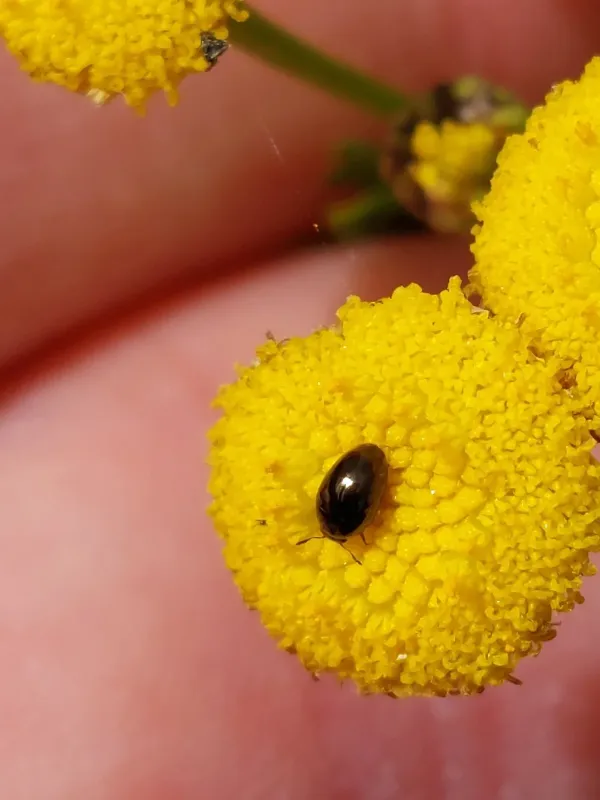
The glipterid beetle (Olibrus aeneus) is a small insect belonging to the family Phalacridae within the order Coleoptera (beetles).
Adult beetles are tiny, typically measuring between 2 to 3 mm in length, and are characterized by their compact, oval, and highly convex body shape.
The coloration of the adult is typically a shiny metallic bronze or dark copper, which allows them to blend in well with the floral tissues of their host plants.
The larvae are small, legless, and white or creamy in color, possessing chewing mouthparts specifically adapted for feeding on the developing parts of plant flowers.
These beetles are well-adapted to temperate climates, spending the winter in sheltered areas, such as the upper soil layer or under plant debris, emerging in the spring.
What it damages
The glipterid beetle primarily targets plants of the Asteraceae family, with sunflower crops being the most economically significant host plant in agricultural settings.
Beyond cultivated crops, these beetles frequently utilize wild-growing plants like thistles and sow-thistles as alternative food sources and breeding sites throughout the season.
Both adults and larvae contribute to the damage: adults consume pollen and floral parts, while larvae feed internally within the flower heads on developing seeds.
Significant infestations lead to reduced seed weight and quality, often causing direct yield losses by compromising the structural integrity of the sunflower head.
Damage caused by larvae often creates entry points for various secondary fungal pathogens, leading to head rot and further reduction in total harvest value.
When it appears
Adults emerge from hibernation during the late spring, coinciding with the early growth stages of their host plants, particularly when floral buds start to form.
Females deposit eggs within the flower buds or in protected floral tissues, ensuring that the emerging larvae have immediate access to food upon hatching.
Larval activity peaks during the blooming stage of the sunflower, which is the most sensitive period for the plant regarding the potential for yield loss.
The entire life cycle, including pupation, often takes place on or near the host plant, with a new generation of adults appearing in late summer.
After reaching maturity, the new generation of adults feeds briefly before migrating to suitable hibernation sites to survive the cold winter months.
Signs of infestation
Early identification involves looking for small holes or scars on the petals and florets of the flower heads during the budding and flowering stages.
Malformed flower heads or uneven seed development are clear indicators that larvae are feeding inside, disrupting the normal growth of the plant's reproductive organs.
The presence of dark excrement pellets among the florets or near the base of the flower head is a common diagnostic sign of a heavy beetle infestation.
- Darkened spots or necrosis on the flower head surface.
- Empty, shriveled, or missing seeds during harvest.
- Reduced head size and deformation.
Confirmation usually requires a detailed inspection, including the dissection of suspected flower heads to locate the larvae actively feeding on the seeds.
Control measures
Crop rotation is the most effective cultural practice, as it prevents the beetle population from building up in fields where sunflower has been grown previously.
Strict weed management, particularly focusing on the elimination of wild Asteraceae near field edges, is crucial to remove alternative breeding habitats.
Deep autumn tillage helps to destroy hibernating adults by exposing them to harsh weather conditions and disrupting their soil-based overwintering sites.
Chemical control should only be implemented when the population exceeds economic thresholds, with careful timing to avoid harming essential pollinators like honeybees.
Applications of insecticides are recommended only before the onset of massive flowering, ensuring that the chemicals do not interfere with the pollination process.
Taxonomy
- Latin name
- Olibrus aeneus
- Order
- Coleoptera (beetles)
- Family
- Phalacridae
- EPPO code
- OLIBAE
Discussion
No discussions yet — be the first.