
Varied carpet beetle
Trogoderma versicolor
Description
How to identify
The Varied carpet beetle (Trogoderma versicolor) is a member of the family Dermestidae. This insect is a significant pest of stored agricultural products, known for its ability to infest a wide variety of materials.
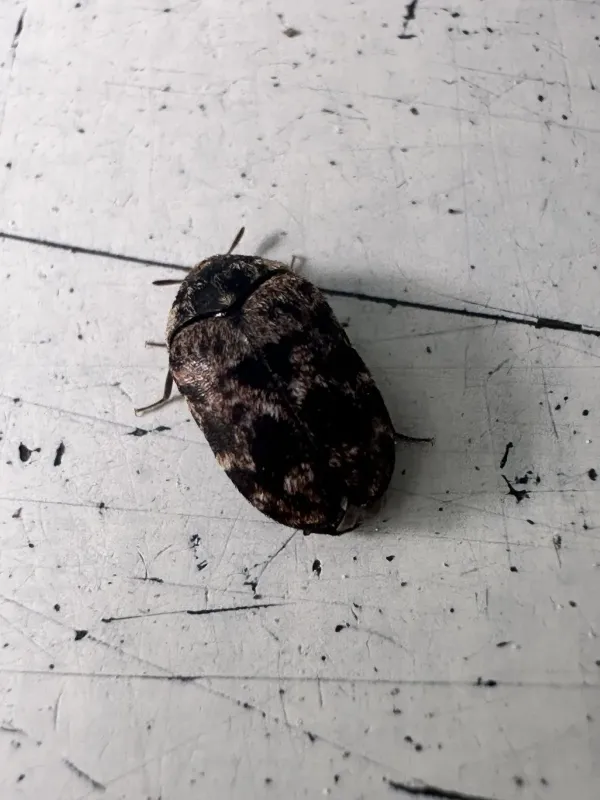
The adult beetle is small, typically ranging from 2.5 to 4 mm in length. Its body is oval-shaped and covered in dense hairs, which gives it a varied or mottled appearance, hence the common name. The color ranges from dark brown to black.
The larval stage is the most destructive phase. The larvae are yellowish-brown, elongated, and densely covered with stiff bristles. At the posterior end, these bristles form a characteristic "tail" or tuft, which helps in identifying the species.
The development follows a complete metamorphosis: egg, larva, pupa, and adult. Females lay their eggs directly within the food source, ensuring that the newly hatched larvae have immediate access to nutrients.
The insect thrives in warm, dry environments. It is highly adaptable and can complete its life cycle quite rapidly under optimal conditions, leading to quick population explosions within storage facilities.
What it damages
Trogoderma versicolor is a polyphagous pest, meaning it feeds on a diverse range of items. It is a major threat to stored grains such as wheat, barley, maize, as well as processed food like flour and animal feed.
In addition to vegetable matter, the carpet beetle is known to attack animal-derived products. These include dried meat, dried fish, powdered milk, cheese, wool, and even dried insects or museum specimens.
Larvae feed by boring into the grains, consuming the germ and endosperm. This damage significantly reduces the weight and quality of the stored goods, rendering grain unfit for planting or food production.
The damage caused is not limited to consumption; infestation results in substantial contamination. The presence of larvae skins, excrement, and dead beetles often leads to the rejection of entire stockpiles.
Under heavy infestation, the metabolic heat generated by the larvae can lead to moisture buildup in grain piles, further encouraging mold growth and secondary pest issues within the silo.
When it appears
In temperature-controlled storage facilities, the Varied carpet beetle can breed continuously throughout the year, as it does not rely on seasonal cues if the indoor climate remains stable.
Outside of climate-controlled environments, adult beetles are most active during the warmer months, when rising temperatures trigger their flight and dispersal to new egg-laying sites.
During cold weather, larvae enter a state of dormancy or diapause in cracks, crevices, or protected areas within the warehouse, waiting for the return of favorable conditions to resume feeding.
The speed of the life cycle is heavily dictated by temperature and humidity. Higher temperatures shorten the developmental time, allowing for multiple generations to occur within a single calendar year.
Spring is often considered the peak time for pest detection, as the end of winter dormancy triggers increased larval movement and the emergence of the first generation of adults for the season.
Signs of infestation
A primary indicator of infestation is the presence of shed larval skins (exuviae) scattered throughout the product, which is a clear sign that the larvae have been actively molting and growing.
Damaged grain often shows small, irregular holes or hollowed-out hulls. When inspecting flour or powders, you may notice a fine, dusty texture caused by the accumulation of larval frass and debris.
Adult beetles may be spotted crawling near windows, in wall cracks, or along shelving units, particularly during the early hours of the day when they are most mobile.
A musty or stale odor emanating from a grain pile or storage container is a strong sign of infestation, often indicating that the insects' metabolic activity has increased the moisture content of the stored mass.
Visible webbing or clumps of material glued together by larval debris are clear warnings of a deep-seated infestation that requires immediate attention and professional management.
Control measures
Sanitation is the cornerstone of control. Keeping warehouses clean of spilled grain, dust, and debris is essential to eliminate harborages where the beetles can feed and hide.
Chemical control often involves the use of fumigants such as phosphine (aluminum or magnesium phosphide) for bulk grain storage to reach pests hidden deep within the grain mass.
Cooling the grain mass is an effective non-chemical strategy; keeping temperatures below 10-12 degrees Celsius significantly slows larval development and suppresses population growth.
Physical barriers and warehouse maintenance, such as sealing wall cracks, repairing floors, and using insect-proof screening, are critical to preventing the entry and spread of the beetle.
- Utilize pheromone-based monitoring traps to detect early infestations.
- Perform thorough deep-cleaning and aerosol disinfection before filling storage units.
- Implement strict inventory rotation (FIFO) to reduce the time goods remain exposed to pests.
Taxonomy
- Latin name
- Trogoderma versicolor
- Order
- Coleoptera (beetles)
- Family
- Dermestidae
- EPPO code
- TROGVE
Discussion
No discussions yet — be the first.