
Trogoderma sternale
Trogoderma sternale
Description
How to identify
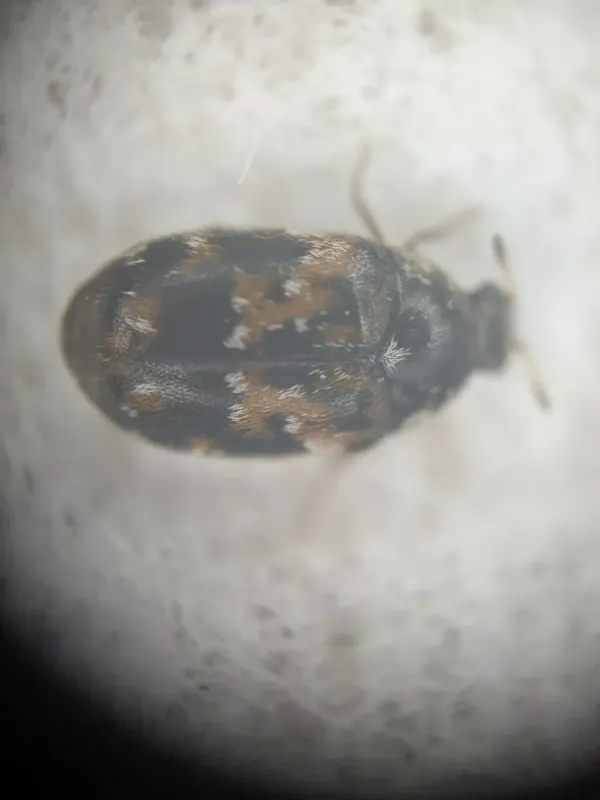
Trogoderma sternale is a species of beetle belonging to the family Dermestidae, commonly known as the carpet beetle family. Adult beetles are small, generally measuring between 2 to 4 millimeters in length, and possess an oval body shape.
Their coloration is typically dark, ranging from brown to black, often featuring a patterned appearance on the elytra due to light or reddish hair clusters. The head is relatively small and retracted, which is a standard feature for this genus.
The larvae are characterized by their elongated, spindle-shaped bodies covered with dense tufts of hair, giving them a fuzzy appearance. This stage is responsible for the majority of the physical damage caused to stored products.
Trogoderma species are notoriously difficult to distinguish from one another without specialized entomological examination, specifically focusing on the male genitalia and dorsal surface patterns.
These beetles are highly adaptable to indoor environments and often exploit small crevices, dust accumulations, and residues in warehouse facilities to sustain their populations across various seasons.
What it damages
The primary diet of Trogoderma sternale larvae consists of stored grain products, including wheat, barley, rice, corn, and oats. They feed on the inner parts of the grains, significantly reducing both nutritional value and physical mass.
Beyond whole grains, this pest infests processed items like flour, bran, cereals, and animal feed. Their ability to consume a wide range of food sources makes them a persistent threat to global supply chains and food safety.
Trogoderma sternale is also known to damage pulses, such as peas and beans, as well as dried fruit, nuts, and various animal-based products. This versatility allows them to thrive in diverse storage conditions.
Larvae can easily penetrate standard packaging materials, including paper sacks and plastic films. This mechanical damage not only destroys the product but also introduces fungal pathogens into the infestation site.
Economic impact is profound, as infested goods often fail quality standards and become unsuitable for human consumption or livestock feed, leading to significant financial losses for storage operators.
When it appears
The development of Trogoderma sternale is highly dependent on environmental temperature. In heated storage facilities, these insects can complete multiple generations throughout the entire year without a dormant phase.
Optimal development occurs in temperatures ranging from 25°C to 30°C. While development slows down as temperatures drop below 15°C, the beetles and larvae remain capable of surviving and resuming activity when conditions improve.
During the spring and summer months, adult beetles become more active and emerge for mating. This period marks the peak of dispersal, as the beetles move throughout the warehouse searching for new food sources and egg-laying sites.
The lifecycle duration varies based on food quality, temperature, and humidity levels. A steady climate inside the storage area can lead to rapid population explosions that are difficult to manage if left unchecked.
Winter months often see the pest retreating to sheltered areas, such as deep cracks, elevator pits, or within the central mass of grain, where self-heating processes provide a warmer microclimate.
Signs of infestation
The presence of Trogoderma sternale is commonly detected by the accumulation of shed larval skins (exuviae), which are left behind during the molting process and can be found in the grain or on warehouse surfaces.
Another indicator is the presence of fine grain dust and fragmented kernels, which are leftover remains from larval feeding. A musty or stale odor often develops in heavily infested areas due to insect waste products.
Physical evidence of damage, such as small boreholes in packaging or grain kernels, is a strong warning sign. Adults are sometimes spotted near windows or light sources during their peak activity season.
Pheromone-baited traps are highly effective for early detection. Monitoring programs using these tools allow operators to identify localized infestations before they spread to other parts of the facility.
Routine inspections of warehouse corners, floor joints, and ventilation systems are crucial, as these areas often serve as primary reservoirs for the pest population before they migrate into the bulk grain.
Control measures
Sanitation remains the most effective long-term control strategy. Removing dust, spills, and residual grain from floors and equipment prevents the buildup of the pest population between storage cycles.
In cases of severe infestation, professional fumigation using gas-based insecticides like phosphine is necessary. This method penetrates packaging and grain bulk to eliminate larvae and adults hiding in inaccessible spots.
Contact insecticides applied as surface treatments to walls and floors create a protective barrier. It is essential to follow all local safety regulations and chemical application protocols to ensure effectiveness and safety.
Maintaining low moisture levels in stored grain is a preventive measure, as drier grain is less attractive and suitable for the rapid growth of Trogoderma populations compared to damp, warm conditions.
- Sealing structural cracks and crevices in warehouse buildings.
- Implementing strict stock rotation policies (First-In, First-Out).
- Installing fine mesh screens on all warehouse ventilation inlets.
- Conducting pre-harvest inspections of all transport containers and storage equipment.
Taxonomy
- Latin name
- Trogoderma sternale
- Order
- Coleoptera (beetles)
- Family
- Dermestidae
- EPPO code
- TROGST
Discussion
No discussions yet — be the first.