
Carpet beetle
Trogoderma ornatum
Description
How to identify
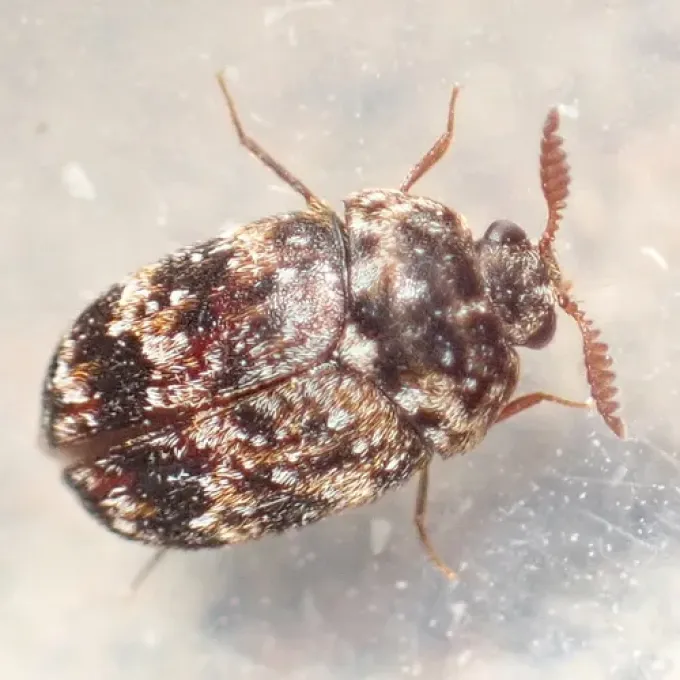
The carpet beetle (Trogoderma ornatum) belongs to the family Dermestidae within the order Coleoptera. Adult beetles are small, ranging from 2.5 to 4 mm in length, with an oval and convex body shape.
The coloration of these beetles features a mottled pattern of dark and light spots formed by fine scales. The pronotum is generally darker than the elytra, giving the beetle a distinctive, easily recognizable appearance among similar species.
Larvae are elongated and covered with dense hairs, often featuring a tuft of longer bristles at the posterior end, commonly referred to as a tail. Larval color varies from pale yellow to brown based on maturity and diet.
The lifecycle follows a complete metamorphosis: egg, larva, pupa, and adult. While adults are short-lived and focused on reproduction, the larval stage is responsible for all feeding damage to products.
Microscopic examination of antennae and genitalia is typically required for precise taxonomic identification, but their general morphology is sufficient for basic field monitoring and identification.
What it damages
The carpet beetle is a serious stored product pest that consumes materials of both plant and animal origin. In agricultural settings, it frequently infiltrates grain storages and distribution centers.
It attacks various grains such as wheat, barley, corn, and rice. Damage to the germ of the seed is particularly critical, as it directly reduces germination potential and market value.
Beyond whole grains, this pest infests processed products like flour, cereals, pasta, dried fruits, and nuts. Its adaptability allows it to persist in diverse storage environments for extended periods.
Within warehouses, these beetles thrive in accumulated organic debris, including spilled grain or dust in hidden cracks, which serve as reservoirs for sustaining and spreading the infestation.
Severe infestations render products unfit for consumption or sale due to heavy contamination with larval exuviae (shed skins), fecal pellets, and fragmented insect body parts.
When it appears
In temperature-controlled storage facilities, Trogoderma ornatum can reproduce continuously throughout the year, as consistent warmth supports constant biological activity.
Optimal temperatures between +20°C and +30°C significantly shorten the developmental cycle, leading to rapid population surges if sanitation measures are neglected during storage.
In unheated environments, peak activity occurs during the spring and summer months, when rising temperatures trigger the emergence of adults from diapause and initiate mating cycles.
As temperatures drop in autumn, larvae often migrate into crevices in floorboards, wall voids, or equipment gaps to survive the winter, demonstrating a high tolerance for varying environmental conditions.
The duration of a generation is highly dependent on environmental variables; in unfavorable conditions, development can slow down significantly, making year-round monitoring essential.
Signs of infestation
The most immediate sign of an infestation is the presence of adult beetles crawling on grain surfaces, window sills, or along the edges of storage containers during routine inspections.
The presence of shed larval skins (exuviae) within product samples is a primary indicator of active reproduction, confirming that the pest is breeding within the batch.
Dusty, floury residue combined with grain fragments indicates larval feeding. When sifted, infested batches often show a significant amount of fine debris mixed with insect excrement.
Feeding damage is often characterized by hollowed-out kernels, with a specific preference for the germ portion of the seed, which can be seen upon close visual inspection of damaged grain.
In cases of high infestation, a noticeable musty odor develops within the storage area, often accompanied by the accumulation of larvae in dark, undisturbed corners or beneath pallets.
Control measures
Sanitation is the cornerstone of control: frequent cleaning of storage areas to remove grain dust, debris, and residues that provide food and shelter for the larvae is crucial.
Thermal methods, including cooling grain to inhibit development during winter or high-temperature drying, are effective non-chemical strategies for managing population growth.
Surface treatment with approved residual insecticides (wet disinfection) is an effective preventive measure to control migrating adults and reduce the likelihood of new infestations.
Fumigation of grain bulk using authorized gases remains the most reliable method for eradicating existing, heavy infestations within sealed storage structures.
- Deploying pheromone-based or adhesive traps for early detection and monitoring.
- Sealing cracks and crevices in warehouse facilities to prevent insect movement.
- Maintaining optimal moisture levels in grain to minimize its attractiveness to pests.
Taxonomy
- Latin name
- Trogoderma ornatum
- Order
- Coleoptera (beetles)
- Family
- Dermestidae
- EPPO code
- TROGOR
Discussion
No discussions yet — be the first.