
Black carpet beetle
Trogoderma nigrum
Description
How to identify
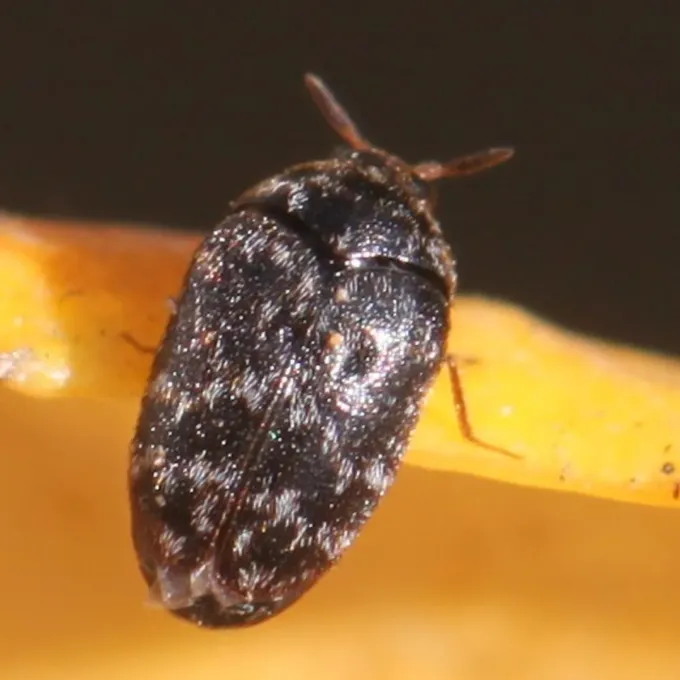
The black carpet beetle (Trogoderma nigrum) is a member of the Dermestidae family, known as significant pests of stored products and grain. Adult beetles are relatively small, typically measuring between 2.5 to 4 mm in length.
Physically, the adult beetle displays an oval or slightly elongated shape, with a body color ranging from dark brown to completely black, which is characteristic of the species.
The larvae are particularly distinct, featuring an elongated body densely covered with fine hairs. They often possess a tuft of long setae at the posterior end, which is a key identifying feature.
The life cycle involves four stages: egg, larva, pupa, and adult. In climate-controlled storage facilities, the beetle can maintain continuous breeding cycles throughout the year.
Females are adept at concealing their eggs, placing them deep within structural cracks, crevices in warehouse flooring, or inside the grain bulk itself to ensure larval survival.
What it damages
It is the larval stage that causes the most significant economic loss, as they are capable of thriving in environments with low moisture content and poor-quality food sources.
This pest targets a wide variety of commodities, including wheat, barley, corn, flour, processed cereals, and various animal feed products stored in silos or warehouses.
In optimal conditions of moderate humidity and warm temperatures, the beetle population can expand rapidly, potentially destroying large quantities of grain in a short period.
Larvae are frequently found in "dead zones" within the storage area, such as beneath wooden pallets, in wall voids, or inside machinery where residual dust accumulates.
Beyond the direct consumption of grain kernels, these beetles contaminate the supply with frass and cast skins, which degrades the product quality and renders it unfit for human consumption.
Signs of infestation
The presence of adult beetles near storage containers, windows, or on the surface of the grain mass is usually the first visible sign of an infestation.
Inspection often reveals damaged grain kernels that have been hollowed out from the inside, leaving behind a fine powder residue and numerous larvae.
The accumulation of shed larval skins (exuviae) is a diagnostic sign of active development, indicating that the larvae have successfully molted multiple times in the area.
In cases of high infestation, a noticeable and unpleasant musty odor may be detected, which is attributed to the high concentration of insect waste products within the grain mass.
Pheromone-based monitoring traps are highly effective in detecting the early presence of Trogoderma nigrum and helping to map the infestation hotspots within the facility.
Control measures
The primary control strategy is rigorous sanitation, which involves the removal of spilled grain, dust, and debris that provide breeding grounds for the beetles.
Proper storage hygiene, including the periodic cleaning of silos and transport equipment, is essential to minimize the risk of cross-contamination and initial infestation.
Chemical fumigation remains a standard intervention for infested grain, usually involving the use of phosphine-based products in sealed environments.
Physical interventions, such as lowering the moisture content of the grain and cooling the storage temperature, significantly hinder the developmental rate of the pest.
- Sealing cracks and crevices in warehouse architecture to eliminate hiding spots.
- Deploying pheromone traps for consistent monitoring and surveillance.
- Maintaining strict temperature and humidity controls in storage units.
- Conducting deep cleaning and empty-bin disinfestation before new crop storage.
Taxonomy
- Latin name
- Trogoderma nigrum
- Order
- Coleoptera (beetles)
- Family
- Dermestidae
- EPPO code
- TROGNI
Discussion
No discussions yet — be the first.