
Warehouse beetle
Trogoderma inclusum
Description
How to identify
The warehouse beetle (Trogoderma inclusum) belongs to the family Dermestidae. These insects are notorious for their ability to thrive in stored product environments, causing significant economic losses to agriculture and food industry.
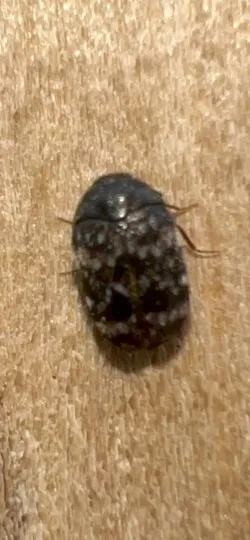
Adult beetles are small, usually ranging from 2.5 to 4 mm in length. Their body is oval-shaped and typically dark in color, sometimes displaying patterns of lighter-colored scales on the elytra.
Larvae of this species are distinct due to their hairiness. These hairs, or setae, are not only a identifying feature but can also cause irritation to humans upon contact, making handling infested materials difficult.
The lifecycle of Trogoderma inclusum is highly adaptable. Under optimal temperatures, the development from egg to adult is rapid; however, larvae possess the ability to enter a state of diapause under stress.
This diapause allows the larvae to survive adverse environmental conditions, including starvation or temperature fluctuations, for extended periods, making them difficult to eradicate completely.
What it damages
The warehouse beetle is a serious pest of grain and processed food products. They readily infest commodities such as wheat, barley, corn, flour, breakfast cereals, and various types of meals.
Beyond standard grains, they also infest nuts, dried fruits, pulses, and oilseeds. This versatility makes them a major concern for warehouses and processing plants handling diverse food inventory.
In addition to food products, the larvae may damage natural materials like wool, furs, skins, and even dried specimens in museum collections, owing to their ability to digest keratin-based materials.
The primary damage is caused by the larvae feeding on the endosperm of the grain, which leads to substantial weight loss and a decrease in the quality of the raw material.
Infested goods become contaminated with cast skins, larvae excrement, and detached hairs, which poses health risks and renders the products unfit for human or animal consumption.
Signs of infestation
The presence of adult beetles crawling on floors, walls, or near storage containers is a clear indication that a population is actively developing within the storage facility.
Accumulation of fine dust and debris around stored bags is a typical sign. This material consists of frass, empty larval skins, and broken grain parts, indicating high-density infestation.
Damage to the packaging material, such as small holes chewed by larvae in paper sacks or plastic liners, suggests that the insects are seeking food sources or moving between storage zones.
Visible clusters of larvae can often be found in dark, undisturbed areas, such as floor cracks, corners of warehouses, or within the folded seams of packaging material.
A musty odor emanating from the grain piles often accompanies a heavy infestation, resulting from the combined effect of larval activity, excrement, and secondary mold growth.
Control measures
Maintaining high levels of sanitation is the first line of defense. Regular cleaning of storage facilities, specifically removing spilled grain and debris, effectively limits the insect's food supply.
Monitoring programs using pheromone-baited sticky traps should be implemented to detect adult activity early, providing the data needed to decide when to initiate specific control measures.
Chemical control usually involves fumigation using approved gases (like phosphine) in professional warehouse settings, which is effective at reaching deep into product stacks to kill all life stages.
Physical control measures, such as adjusting warehouse temperature through ventilation or utilizing cold storage, are essential for disrupting the development of the beetle population.
Implementing a robust inventory management system, including the use of airtight storage bins and rotating stocks (FIFO principle), prevents the buildup of the infestation over time.
Taxonomy
- Latin name
- Trogoderma inclusum
- Order
- Coleoptera (beetles)
- Family
- Dermestidae
- EPPO code
- TROGIN
Discussion
No discussions yet — be the first.